L/C Concrete Services In Lower Hutt, Wellington.

Concrete Curing & Drying Times Before Walking, Driving & Sealing

Understanding Concrete Curing, Drying, And Use Times After Pouring

Lower & Upper Hutt Concrete Services shares concrete curing information for property owners across Lower Hutt, Upper Hutt, and Wellington. Learn when new concrete can be walked on, driven on, sealed, loaded, protected, and used after pouring.

Lower & Upper Hutt Concrete Services Logo - Concrete Curing & Drying Times Article

Does Concrete Dry Or Cure?

People often ask how long concrete takes to dry, but concrete does not harden in the same way as paint, timber, or plaster. Concrete gains strength through curing and hydration.
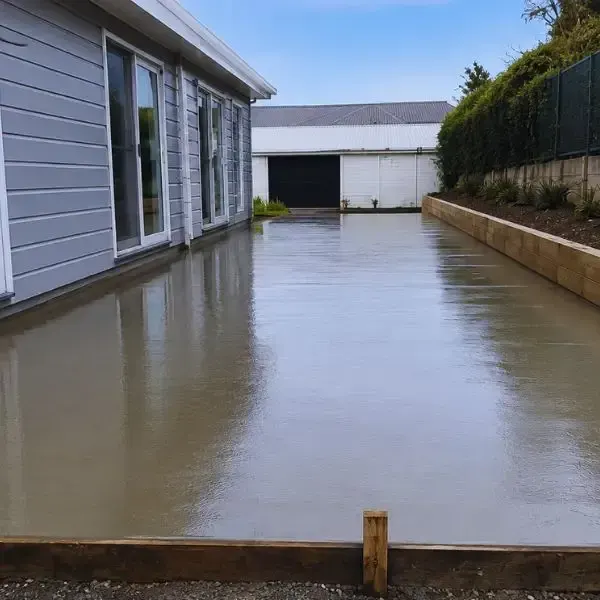
Fresh residential concrete patio surface with moisture sheen while curing.
  • Hydration is the chemical reaction between cement and water.


  • Curing helps concrete retain enough moisture while strength develops.


  • The surface may look dry before the concrete is ready for normal use.


  • Concrete can lose moisture too quickly in hot, dry, windy, or exposed conditions.


  • Cold or frosty conditions can slow early strength gain.


  • Poor curing can affect surface strength, durability, wear resistance, and long-term performance.


  • Drying is moisture loss; curing supports strength development. The 28-day strength reference does not confirm that concrete is dry enough for a sealer or floor coating.

Concrete Curing Timeline Guide

Concrete curing times should be treated as a guide only. The right timing depends on the mix, weather, site conditions, and contractor advice.
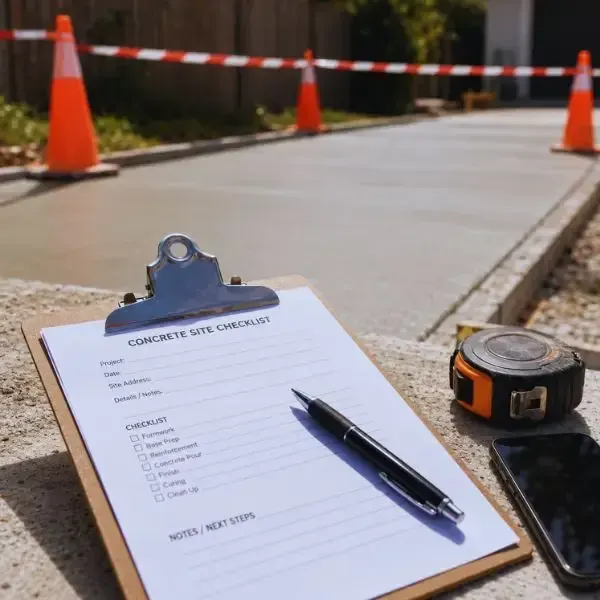
Clipboard and pen beside a blocked-off fresh-concrete driveway for curing timeline planning.
Use Or Timing QuestionGeneral Guide
Light foot trafficOften around 24 to 48 hours, once the surface is hard enough and the contractor confirms it is safe.
Normal foot trafficUsually after the first few days, but avoid dragging furniture, bins, tools, or sharp objects too soon.
Cars on drivewaysKeep vehicles off new concrete driveways for at least 7 days unless the contractor advises otherwise.
Utes, trailers, vans, boats, caravans, or heavier vehiclesOften closer to 28 days, depending on slab design, concrete strength, thickness, curing, and intended use.
Sealing new concreteMany standard sealer systems require the concrete to cure first, typically for about 28 days, unless a specific early-use sealer or curing system is used.
Heavy loads or building on slabsTiming depends on slab design, intended load, concrete strength, curing progress, and any contractor or engineer requirements

These timeframes are general only. The safest approach is to confirm the correct timing for your specific project before walking, driving, sealing, loading, or building on new concrete.

How Long Before You Can Walk On Concrete?

Light foot traffic is usually possible before vehicle use, but the concrete surface still needs protection during the early curing stage to prevent marks and damage.
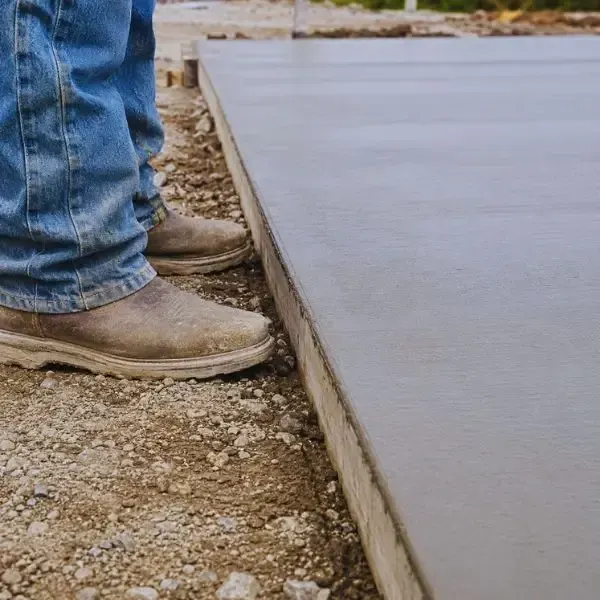
Work boots beside fresh concrete show when it may be safe to walk on after curing.
  • Stay off freshly placed concrete while it is being finished and protected.


  • Light walking may be possible after about 24 to 48 hours, once the surface has hardened enough for careful access.


  • Do not walk on concrete while it is soft enough to mark, scuff, or dent. Follow the contractor’s advice before allowing access.


  • Avoid dragging bins, chairs, ladders, garden tools, wheelbarrows, or furniture across new concrete.


  • Pets, bikes, scooters, and children’s toys can mark or scratch the surface if used too early.


  • Paths, patios, porches, and steps should still be treated carefully during the first few days.


  • Decorative finishes may need extra care because the surface appearance is part of the finished result.

How Long Before You Can Drive On Concrete?

Driveways need more curing time than basic foot-traffic areas because vehicles impose repeated loads, turning forces, braking forces, and parked weight.
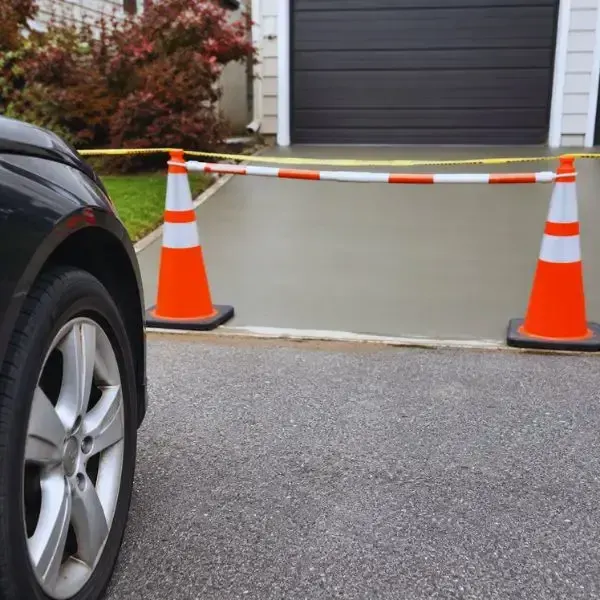
A car stopped before a blocked-off fresh concrete driveway during curing.
  • New concrete driveways should usually be kept vehicle-free for at least 7 days.


  • Regular cars place less demand on the concrete than utes, vans, trailers, boats, caravans, trucks, or machinery.


  • Avoid tight turning, hard braking, trailer jockey wheels, jack stands, skip bins, and heavy parked loads too early.


  • Heavier vehicles may need to stay off the concrete for closer to 28 days, especially where the slab will carry larger or repeated loads.


  • Garage slabs may need different timing from outdoor paths or patios because vehicles, storage, and tools may all add load.


  • Concrete strength, slab thickness, reinforcement, base preparation, curing, and load type all matter.


  • The contractor should confirm when the driveway or slab can be used safely.


For project-specific information, view our pages on Concrete Driveways, Concrete Paths, Concrete Patios & Porches, Concrete Steps, and Shed & Garage Concrete Slabs.

How Long Before Concrete Can Be Sealed?

Concrete sealing should not be rushed. Unless the product allows early application, the concrete usually needs enough curing time and surface dryness before sealing.
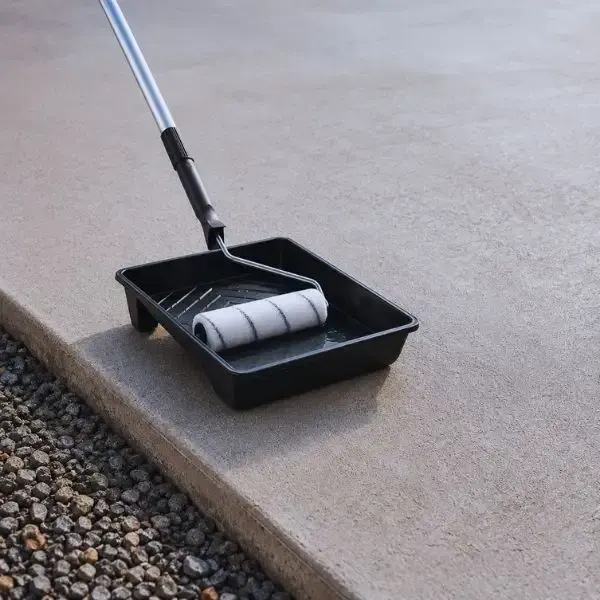
Paint roller and tray on dry concrete surface before sealing.
  • Many standard concrete sealers are applied after the concrete has cured, often around the 28-day mark.


  • The surface should be properly dry, clean, and prepared before normal sealing.


  • Sealing too early can trap moisture or affect the final result.


  • Some systems use curing compounds, pre-sealers, or early-sealing products, but these must be compatible with the concrete and follow the supplier's instructions.


  • Exposed aggregate, coloured concrete, stamped concrete, and decorative finishes may have different sealing requirements.


  • Outdoor concrete should be checked for moisture, weather exposure, surface condition, and slip resistance before sealing.


  • The contractor or product supplier should confirm the right sealing window.


For guidance on sealing driveways, paths, patios, porches, steps, slabs, and other suitable concrete surfaces, visit Concrete Sealing.

Building Or Loading Concrete Slabs

Shed slabs, garage slabs, workshop slabs, outdoor kitchen areas, and other concrete bases may need more careful timing before they are built on or heavily loaded.
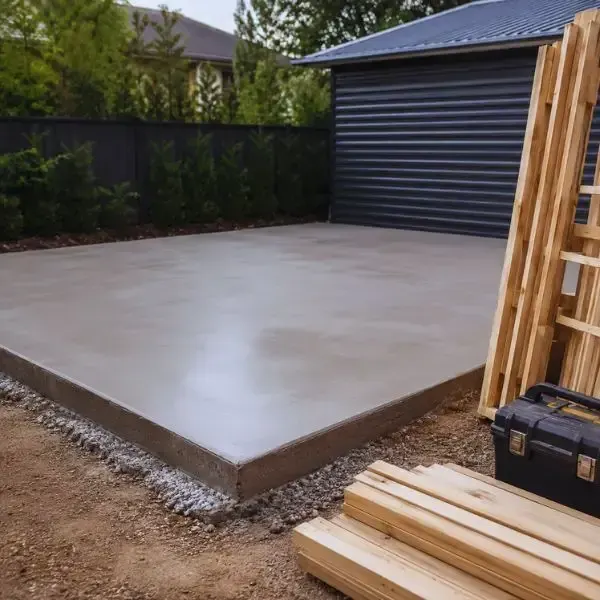
Building materials beside a fresh concrete slab before heavy loading or construction.
  • A slab may look dry before it is ready for heavy loads.


  • Light foot traffic is different from storing equipment, parking vehicles, installing sheds, or loading materials.


  • Shed and garage slab timing should match the slab design, concrete strength, intended use, and expected loads.


  • Heavy items such as machinery, storage shelves, water tanks, spa pools, trailers, or building materials should not be placed too early.


  • Some slabs may need guidance from an engineer, builder, shed supplier, or contractor before loading.


  • Slab thickness, reinforcement, base preparation, and curing quality all affect how the slab performs.


  • Do not assume the concrete is ready for heavy use just because the surface looks dry.

What Affects Concrete Curing And Drying Times?

Concrete curing and drying times can vary between jobs. Two concrete areas poured on the same day can cure differently if their design, exposure, finish, or site setup differs.
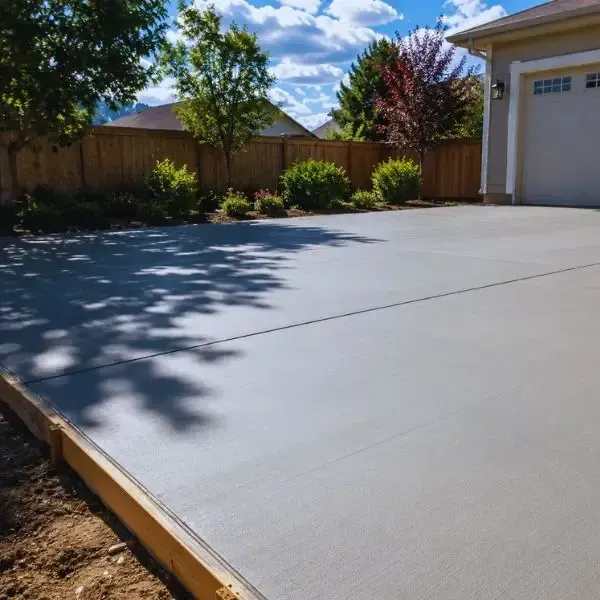
Fresh concrete slab in sun and shade, showing how weather and exposure can affect curing and drying times.
  • Concrete mix and MPa strength rating.


  • Slab thickness and concrete volume.


  • Weather before, during, and after the pour.


  • Temperature, wind, direct sun, rain, shade, and humidity.


  • Ground moisture, drainage, soft areas, and base preparation.


  • Curing method, such as curing compound, plastic sheeting, moisture curing, or other protection.


  • Surface finish, including broom finish, swirl finish, exposed aggregate, coloured concrete, or stamped concrete.


  • Whether the area is used for foot traffic, vehicles, storage, or heavier loads.


  • Whether the concrete is exposed, sheltered, shaded, coastal, or frost-prone.


  • How soon the surface is walked on, driven on, sealed, washed, loaded, or built on.


For more details on concrete strength, see our guide to What Does MPa Mean In Concrete?

Hutt Valley Weather And Concrete Curing

Concrete curing can be affected by Hutt Valley weather. Lower Hutt, Upper Hutt, and Wellington sites span valley floors, hill suburbs, coastal edges, and shaded areas.
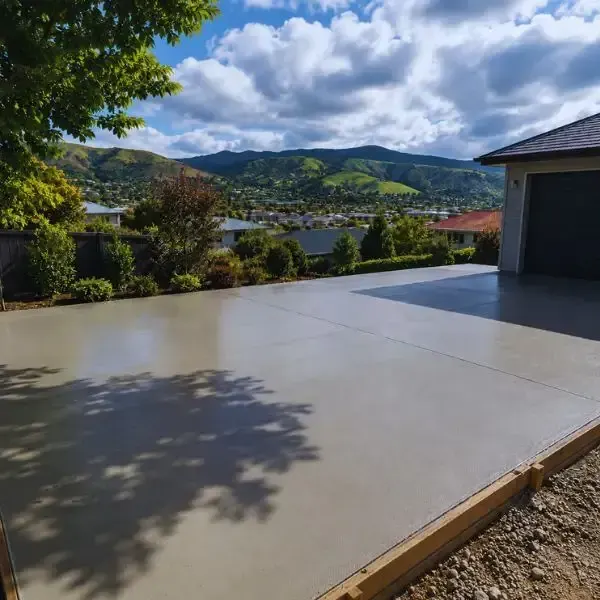
Fresh concrete driveway with sun, shade, clouds, and hills showing local weather effects on curing.
  • Rain can affect preparation, finishing, curing, surface protection, and the timing of when concrete can be used.


  • Wind can dry the surface faster, especially on exposed sites or coastal areas.


  • Hot sun can increase moisture loss from the surface.


  • Cold mornings, frost, and shaded areas can slow early strength gain.


  • Upper Hutt sites may require extra consideration in colder winter conditions.


  • Lower Hutt coastal, harbour, and exposed areas may cure differently from sheltered inland sites.


  • Low-lying or damp sites may need more attention to drainage, ground moisture, and surface protection.


  • Contractors may adjust pour timing, curing approach, and use-time advice based on the forecast and the actual site.


For more local planning context, view our guide on Concrete Work In The Hutt Valley.

Protecting New Concrete Before Use

New concrete should be protected while it cures. The first few days matter because the concrete surface is still developing strength, hardness, and durability.
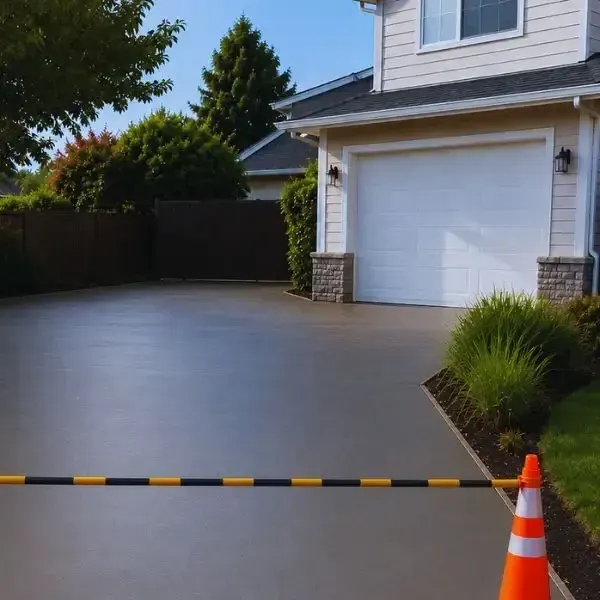
Fresh concrete driveway blocked off with cones and a barrier before normal use.
  • Follow the contractor’s instructions for walking, driving, sealing, and loading.


  • Keep vehicles off the concrete until it is ready for use.


  • Avoid dragging bins, furniture, tools, ladders, trailers, or sharp objects across the surface.


  • Do not pressure wash new concrete too early.


  • Avoid harsh cleaning chemicals before the surface is ready.


  • Do not place heavy loads, skips, pallets, machinery, trailers, or building materials too soon.


  • Avoid sealing the concrete unless the product and timing are suitable.


  • Keep pets, children, bikes, scooters, and garden equipment away from the surface during the early curing period.


  • Protect the concrete from heavy rain, freezing conditions, excessive drying, or early damage where needed.


  • Ask the contractor what to do if unexpected rain, frost, heat, or surface marking occurs after the pour.


For more information about base preparation and long-term performance, read our guide on Concrete Preparation & Basecourse.

Next Steps For Concrete Curing & Drying Times

Ready to plan your concrete project with curing time in mind? Concrete may look dry before it is ready for full use, and the right timing depends on the area, finish, load type, slab thickness, concrete strength, curing method, local conditions, and what is confirmed during a site visit.


To take the next step, call 04 242 0311 or fill out our CONTACT FORM for your FREE QUOTES!

Business Hours & Contact

Mon - Fri

7:00 am - 5:30 pm

Saturday

7:00 am - 3:00 pm

Sunday

Closed

Social Media Accounts

Lower & Upper Hutt Concrete Services Logo - Footer Section.

CLM Connect Limited Owned

Lower & Upper Hutt Concrete Services is a local service marketing and coordination channel managed by CLM Connect Limited.


Physical concrete work is completed by independent concrete contractors or service providers.

© 2026 Lower & Upper Hutt Concrete Services | All Rights Reserved