L/C Concrete Services In Lower Hutt, Wellington.

Exposed Aggregate Concrete Cost & Prices For Driveways, Paths, Patios & Porches In Lower Hutt & Upper Hutt

What To Expect From Exposed Aggregate Concrete Pricing In The Hutt Valley

Lower & Upper Hutt Concrete Services shares pricing guidance for exposed aggregate across Lower Hutt, Upper Hutt, and Wellington. Compare project type, aggregate mix, oxide, preparation, exposure, washing, sealing, access, and other cost factors before contractor visits.

Lower & Upper Hutt Concrete Services Logo - Exposed Aggregate Concrete Cost & Prices Article.

Quick Exposed Aggregate Concrete Pricing Overview

Exposed aggregate concrete is usually estimated per square metre, although contractors price the complete project. Project type, preparation, thickness, aggregate mix, oxide, exposure, washing, access, and sealing can all influence the final cost.

Indicative Exposed Aggregate Concrete Pricing Per M², Excluding GST

Project TypeTypical Thickness / Use GuideIndicative Price RangeMain Pricing Considerations
Concrete Driveway100mm common residential guide. Heavier vehicle use may require more$165 to $200 per m²Vehicle loads, preparation, reinforcement, drainage, access, aggregate mix, oxide, exposure, washing, sealing
Concrete Path75mm pedestrian-only guide. 100mm where vehicle access is possible or uncertain$165 to $200 per m²Width, curves, boxing, ground conditions, access, aggregate mix, oxide, exposure, washing, sealing
Concrete Patio & Porch100mm common guide for straightforward ground-level areas. Structural porch requirements can vary$165 to $200 per m²Area, levels, thresholds, drainage, structural details, access, aggregate mix, oxide, exposure, washing, sealing

These prices exclude GST and are only broad budgeting ranges. The same exposed aggregate rate does not mean that every driveway, path, patio, or porch will have the same final square-metre cost, because the construction requirements beneath the decorative finish can vary considerably.


A residential driveway may require vehicle-grade preparation and reinforcement, while a pedestrian path can use a lighter specification where vehicles cannot access it. A straightforward ground-level patio can also differ significantly from a porch involving steps, foundations, posts, thresholds, or structural connections.


Use our Exposed Aggregate Concrete Cost Calculator for an early estimate based on your planned concrete area and finish. Final thickness, reinforcement, preparation, access, drainage, and other site requirements should still be confirmed after contractor inspection.
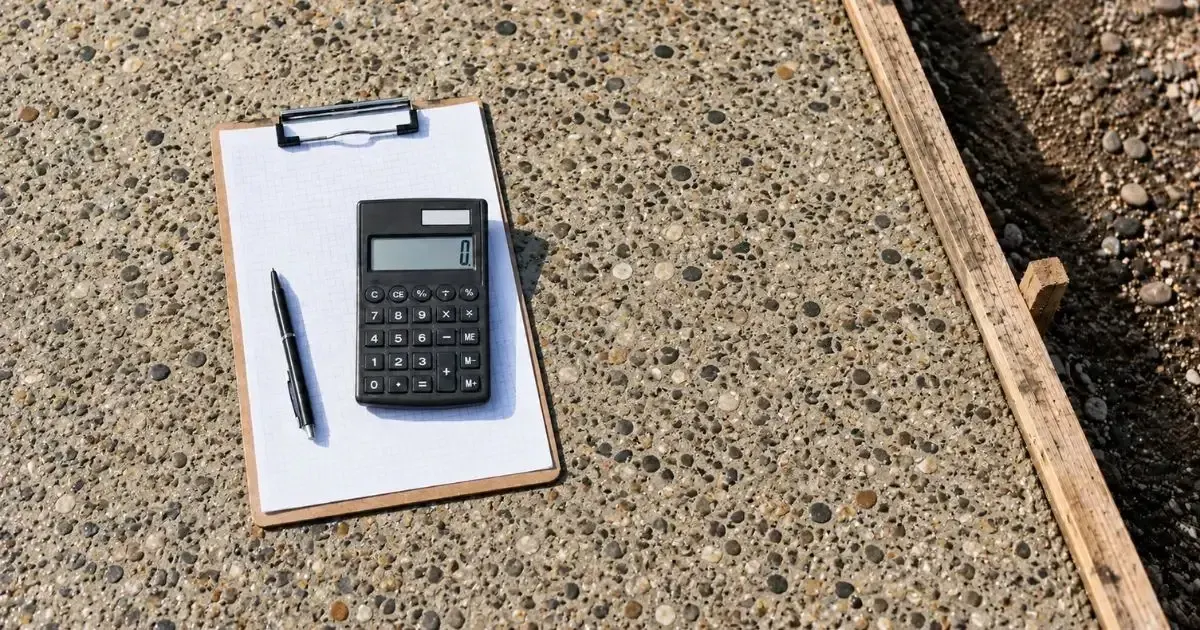
Concrete cost calculator and clipboard beside fresh concrete for exposed aggregate pricing in Lower Hutt & Upper Hutt.

Example Exposed Aggregate Concrete Costs By Project Type And Size

Applying an indicative exposed-aggregate rate to the planned area provides an early budget estimate. These examples exclude GST, unusual excavation, restricted access, pumping, drainage changes, structural work, and other site-specific extras.

Example Exposed Aggregate Concrete Estimates, Excluding GST

Approximate ProjectAreaIndicative Exposed Aggregate Range
Compact path, patio, or ground-level porch area15m²$2,475 to $3,000
Patio or outdoor entertaining area30m²$4,950 to $6,000
Residential driveway50m²$8,250 to $10,000
Larger residential driveway80m²$13,200 to $16,000

The 15m² figures above are based on simple area-by-rate calculations. For exposed aggregate projects under 20m², the total cost may still be near the Hutt Valley’s indicative $2,500+ small-job starting point, excluding GST. Even on a compact area, costs such as setup, concrete delivery, boxing, reinforcement, labour, aggregate selection, surface exposure, washing, finishing, and clean-up still need to be allowed for.


The $2,500+ figure is an indicative guide rather than a fixed minimum. Final pricing may change based on the selected aggregate mix, oxide treatment, preparation requirements, access, drainage, concrete thickness, heavier loading, decorative edging, sealing, or other site-specific conditions that affect how the exposed aggregate surface is prepared and finished.

New Exposed Aggregate Concrete Versus Replacement Costs

New and replacement exposed aggregate projects can cover the same finished area while requiring very different removal, preparation, matching, and reinstatement work. Those differences can noticeably change the overall project cost.

  • A new exposed aggregate driveway over lawn or soil may require excavation, basecourse, compaction, boxing, reinforcement, drainage planning, and vehicle-grade preparation.


  • A new exposed aggregate path through lawn, garden, gravel, or soil may involve narrow excavation, detailed edge boxing, level changes, and restricted access.


  • A new exposed-aggregate patio or porch may require careful planning around doorways, thresholds, steps, cladding, landscaping, drainage, and adjoining outdoor surfaces.


  • Replacing an old concrete area may require saw cutting, breaking, machinery, loading, cartage, and disposal before the new exposed aggregate surface can be prepared.


  • Existing asphalt, pavers, gravel, timber decking, lawn, topsoil, or other materials may require different removal methods and preparation beneath them.


  • Replacing only part of an older exposed aggregate surface can make visual matching difficult because the stone, cement tone, oxide, exposure, sealing, and weathering may have changed over time.


  • Extensions and separate pours can reveal natural differences in aggregate distribution, oxide tone, exposure, curing, and overall appearance, even when a similar mix is selected.


  • Tree roots, soft ground, buried rubble, unsuitable fill, damaged drainage, or underground services may only become clear once removal or excavation begins.


For a full breakdown of excavation, base materials, compaction, boxing, and reinforcement before concrete placement, see Concrete Preparation & Basecourse.

Preparation, Access And Hutt Valley Site Conditions

Exposed aggregate pricing is strongly influenced by how the site is prepared, accessed, and poured. Restricted access, difficult placement, or poor ground can increase labour before the decorative exposure and washing stages even begin.

  • Excavation creates room for the required basecourse and the planned concrete thickness.


  • Soft, wet, loose, unstable, or previously disturbed ground may require additional material to be removed and replaced before a suitable base is formed.


  • Basecourse may need to be supplied, shaped, levelled, and compacted beneath the complete project area.


  • Boxing forms the driveway edges, path curves, patio corners, entrances, transitions, and finished levels before the exposed-aggregate concrete is placed.


  • Reinforcement requirements depend on the project type, intended use, thickness, ground conditions, and expected loads.


  • Gates, fences, houses, carports, retaining walls, gardens, steps, and narrow side passages can restrict access for small diggers and increase the need for manual preparation.


  • A concrete truck may not be able to discharge directly into a rear patio, a side path, an enclosed entrance, or a difficult driveway area.


  • Fresh concrete may need to be transported by chute, wheelbarrow, buggy, or pump where direct truck placement is not practical.


  • Longer placement distances can make an exposed aggregate pour more time-sensitive because surface finishing and exposure need to be managed consistently across the area.


  • Curved, sloping, narrow, stepped, multi-level, or unusually shaped areas can require additional boxing, labour, and detailed finishing.


  • Rainfall, frost, wind, heat, shade, soft ground, drainage, and local terrain can influence preparation, placement, exposure timing, washing, and scheduling.


Local rainfall, slopes, ground conditions, drainage, access, and terrain are covered further in Concrete Work In The Hutt Valley.

Project Type, Thickness And Intended Use

Exposed aggregate changes appearance and finishing, not underlying load requirements. Driveways, paths, patios, and porches may require different thicknesses, reinforcement, preparation, and load allowances, which affect pricing.

  • Residential exposed-aggregate driveways are commonly budgeted at around 100mm thick for normal cars and similar residential vehicles.


  • Utes, trailers, vans, trucks, machinery, or repeated heavier vehicle use may require greater thickness, additional reinforcement, or stronger base preparation.


  • A pedestrian-only exposed aggregate path may use a 75mm guide where the ground is suitable, and vehicle access can be completely ruled out.


  • Paths beside driveways, parking areas, or vehicle entrances may need a 100mm or vehicle-area specification where wheels could cross or mount the concrete.


  • Straightforward ground-level exposed-aggregate patios are commonly budgeted at around 100mm for normal foot traffic, outdoor furniture, and residential use.


  • Spa pools, masonry fireplaces, large outdoor kitchens, heavy planters, or other concentrated loads can require thicker concrete, additional support, or project-specific design.


  • Porches involving foundations, raised sections, posts, columns, roof supports, or house connections can require a different specification from a straightforward ground-level slab.


  • Increasing concrete thickness increases the volume of concrete required for the same measured area and can raise the overall project price.


  • A higher MPa rating does not replace the need for suitable thickness, base support, reinforcement, drainage, joints, curing, or workmanship beneath the exposed aggregate finish.


To understand how concrete strength ratings fit into these project decisions, read What Does MPa Mean In Concrete?

Drainage, Levels And Council-Related Costs

Drainage and finished levels can add cost before the exposed aggregate surface is completed. Driveways, paths, patios, and porches must manage runoff while connecting properly with entrances, adjoining surfaces, and surrounding ground.

  • Existing low spots or ponding areas may require level corrections before the exposed-aggregate concrete is installed.


  • Driveway falls should be directed away from garages, homes, neighbouring property, or other unsuitable low points.


  • Paths beside houses, foundations, gardens, retaining walls, or fences may require carefully controlled finished levels.


  • Patio and porch surfaces need to connect appropriately with doors, thresholds, steps, cladding, gardens, and adjoining outdoor areas.


  • Channel drains, strip drains, catchpits, or other drainage features may be needed depending on the project layout and surrounding levels.


  • Underground stormwater, wastewater, water, power, gas, or communication services can affect excavation depth and concrete positioning.


  • New or altered driveway entrances can introduce vehicle-crossing, berm, footpath, kerb, or road-corridor requirements.


  • Private paths connecting with public footpaths, berms, reserves, or other council-controlled areas can require additional checks.


  • Shared property, easements, boundaries, drainage assets, retaining work, or structural porch details can introduce additional planning, design, or approval costs.


For broader guidance on building consent, resource consent, drainage, public assets, earthworks, road corridors, and property-specific checks, refer to Concrete Council Regulations.

Aggregate Mix, Stone Size And Black Oxide Costs

Aggregate mix, stone size, and black oxide can change both the appearance and supplied cost of exposed aggregate concrete. Material selection, batch quantity, decorative detailing, and consistency across larger areas can also affect pricing.

  • Smaller aggregate can create a finer overall surface texture, while larger stones produce a bolder and more noticeable exposed appearance.


  • Aggregate availability, selected mix, stone size, project area, and concrete quantity can influence the cost of supplied material.


  • Adding black oxide darkens the cement paste around the exposed stones and creates a deeper grey overall appearance.


  • The amount or strength of oxide included in the concrete mix can influence material pricing.


  • Larger driveways, paths, or patios may require careful batch planning to maintain reasonable consistency in aggregate distribution and oxide appearance.


  • Decorative borders or contrasting finishes can require additional boxing, materials, concrete placement, and finishing labour.


  • Separate pours can show differences in stone distribution, oxide tone, exposure, curing, and finished appearance.


  • Natural aggregate can vary between batches, so samples and finish examples should be treated as visual guides rather than guarantees of an identical completed surface.


For the step-by-step process for exposure timing, washing, stone reveal, oxide, and final surface finishing, visit How Is Exposed Aggregate Concrete Finished?

Exposure, Washing, Sealing And Weather-Related Costs

Exposure, washing, and sealing add specialist stages to exposed aggregate concrete. Contractor timing, weather, surface consistency, wash-water management, curing conditions, and initial sealing can influence final pricing.

  • The timing of the exposure process affects how much stone becomes visible and how evenly the aggregate is revealed across the finished surface.


  • Surface washing needs to remove enough cement paste to expose the aggregate without washing excessively around the stones.


  • Larger driveways and patios may require carefully planned placement and washing sequences to ensure different parts of the pour reach the correct exposure stage at the right time.


  • Hot, dry, windy, cold, shaded, wet, or changing weather can alter concrete setting times and reduce or extend the available finishing window.


  • Surface runoff and wash water need to be managed during the creation of the exposed aggregate finish.


  • Initial sealing may be included within the concrete quote or priced separately depending on the contractor, selected product, and project scope.


  • The concrete requires appropriate curing and moisture conditions before certain sealing products can be applied.


  • Future resealing creates an ongoing maintenance cost that should be considered when comparing exposed aggregate with other decorative finishes.


  • Exposed aggregate driveways experience tyre marks, vehicle traffic, fluids, and heavier wear, while paths, patios, and porches face different pedestrian, furniture, weather, and cleaning conditions.


Curing, walking, vehicle use, weather, and sealing timeframes after placement are reviewed in Concrete Curing & Drying Times.


For longer-term cleaning, protection, maintenance, and resealing guidance, check out Exposed Aggregate Concrete Maintenance And Sealing Information.

Why Small Exposed Aggregate Projects Cost More Per M2

Small exposed aggregate areas can carry a higher effective per-m² rate because setup, delivery, decorative finishing, exposure, washing, and clean-up costs remain necessary even when the total concrete area is limited.

  • Contractors still need to allow for travel, tools, machinery, boxing, reinforcement, labour, concrete placement, finishing, washing, and clean-up.


  • Small concrete quantities can attract delivery or small-load charges.


  • Selected aggregate or oxide mixes may need to be supplied in quantities that are not perfectly proportional to the finished project area.


  • Excavation and spoil removal can still require machinery, hand labour, cartage, and disposal.


  • Narrow paths, small entrances, rear patios, and restricted side access can increase manual handling.


  • Curves, steps, corners, borders, thresholds, or other detailed edges can create more finishing work per square metre.


  • Exposing and washing a small decorative area still requires careful timing and contractor labour.


  • Initial sealing can introduce another preparation and application stage.


  • Hutt Valley concrete projects under 20m² may have an indicative starting price of approximately $2,500+.


  • The $2,500+ figure is guidance only, not a fixed or guaranteed minimum.


  • Final pricing can vary based on project type, access, excavation, preparation, thickness, reinforcement, drainage, aggregate mix, oxide, surface detailing, sealing, and site conditions.

Typical Inclusions In Exposed Aggregate Concrete Quotes

Exposed aggregate quotes usually cover the work needed to prepare the site, form and reinforce the area, place the selected mix, expose and wash the stone surface, complete the finish, and clean up afterwards.

  • Site inspection and confirmation of the project type, dimensions, intended use, and overall scope.


  • Removal of existing concrete, asphalt, pavers, gravel, lawn, soil, decking, roots, or other material where included.


  • Excavation, basecourse, compaction, boxing, and finished levels.


  • Concrete thickness, MPa strength, supply, and placement.


  • Reinforcing mesh, steel, fibres, or other reinforcement where specified.


  • The selected exposed aggregate mix and stone size.


  • Black oxide or another agreed mix variation where selected.


  • Surface exposure, washing, and decorative finishing.


  • Saw cuts, control joints, and connections with adjoining concrete.


  • Drainage falls, channels, thresholds, transitions, or level corrections included within the scope.


  • Decorative borders or contrasting sections where specifically included.


  • Initial sealing where clearly stated in the quote.


  • Clean-up, spoil cartage, and disposal.


  • Pumping, difficult-access labour, landscaping reinstatement, structural work, council-related requirements, or other items where included or separately priced.

How To Read And Compare Exposed Aggregate Concrete Quotes

Exposed aggregate quotes should be compared based on the full construction scope and the exact decorative finish, not just the final total. Similar prices can include different allowances for aggregate mixes, oxides, preparation, sealing, access, and finishing.

  • Verify the contractor's legal business details, NZBN, contact information, and quote reference.


  • Confirm whether GST is included or excluded.


  • Make sure each contractor has measured and priced the same total project area.


  • Compare the excavation, removal, basecourse, compaction, boxing, and disposal allowances.


  • Review the proposed concrete thickness, MPa strength, reinforcement, and intended use.


  • Confirm each quote is based on the same exposed aggregate mix and stone size.


  • Check whether black oxide is included and whether each contractor is pricing the same selected mix.


  • Compare exposure, washing, surface finishing, and clean-up allowances.


  • Confirm whether initial sealing is included, optional, separately priced, or excluded.


  • Compare drainage, edges, transitions, decorative borders, thresholds, driveway connections, or other detailed work.


  • Check separately priced items or exclusions for pumping, restricted access, structural work, disposal, reinstatement, or additional preparation.


  • Ask how soft ground, tree roots, buried material, additional excavation, drainage problems, or underground services would be treated if discovered after work begins.


  • Review payment terms, quote expiry, expected timing, exclusions, workmanship information, and the variation process.

Next Steps For Exposed Aggregate Concrete Costs

Ready to have your exposed aggregate driveway, path, patio, or porch professionally priced? Per-m² ranges provide a useful starting point, but the final cost reflects area, existing surface, preparation, concrete specification, access, drainage, aggregate mix, stone size, oxide, exposure, washing, sealing, site conditions, and the scope confirmed on site.


Visit our Exposed Aggregate Concrete page to compare available aggregate mixes, explore driveway, path, patio, and porch options, understand the quote process, and see how exposed aggregate can suit different outdoor areas.


To take the next step, call 04 242 0311 or fill out our CONTACT FORM for your FREE QUOTES!

Business Hours & Contact

Mon - Fri

7:00 am - 5:30 pm

Saturday

7:00 am - 3:00 pm

Sunday

Closed

Social Media Accounts

Lower & Upper Hutt Concrete Services Logo - Footer Section.

CLM Connect Limited Owned

Lower & Upper Hutt Concrete Services is a local service marketing and coordination channel managed by CLM Connect Limited.


Physical concrete work is completed by independent concrete contractors or service providers.

© 2026 Lower & Upper Hutt Concrete Services | All Rights Reserved