L/C Concrete Services In Lower Hutt, Wellington.

How Concrete Grinding & Polishing Works: Step By Step

Understanding The Concrete Grinding & Polishing Process In The Hutt Valley

Lower & Upper Hutt Concrete Services explains concrete grinding and polishing across Lower Hutt, Upper Hutt, and Wellington. Learn how slab assessment, preparation, aggregate exposure, surface refinement, and protection influence the finished floor and its care.

Lower & Upper Hutt Concrete Services Logo - How Concrete Grinding & Polishing Works Article.

Quick Concrete Grinding & Polishing Overview

Grinding and polishing follow a planned sequence, but the starting point, preparation, abrasive stages, and protective treatments depend on the floor and selected system.
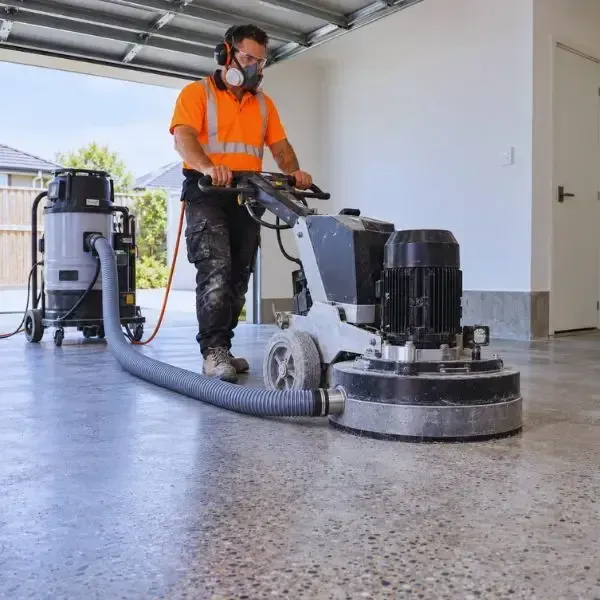
A contractor is operating a concrete floor grinder connected to a dust extractor inside a residential garage.
  • The specialist assesses the concrete and discusses the intended use, preferred appearance, and practical limitations.


  • Existing coverings, coatings, contamination, and surface defects are assessed before preparation begins.


  • Initial grinding removes surface material where needed and establishes the achievable level of aggregate exposure.


  • Repairs, surface grouting, and hardening treatments may be incorporated at suitable stages.


  • Mechanically polished concrete is progressively honed and polished toward the agreed surface finish.


  • Grind-and-seal floors are prepared for a compatible protective coating rather than necessarily receiving the full mechanical polishing sequence.


  • Polishing-only work may suit concrete already in an appropriate condition, but the specialist must confirm what preparation remains necessary.


  • Final protection, cleaning, inspection, and return-to-use instructions complete the agreed work.

Assessing The Slab And Choosing The Finish

The existing slab affects achievable results. The assessment considers the concrete condition, previous treatments, intended use, aggregate exposure, sheen, and practical project requirements.
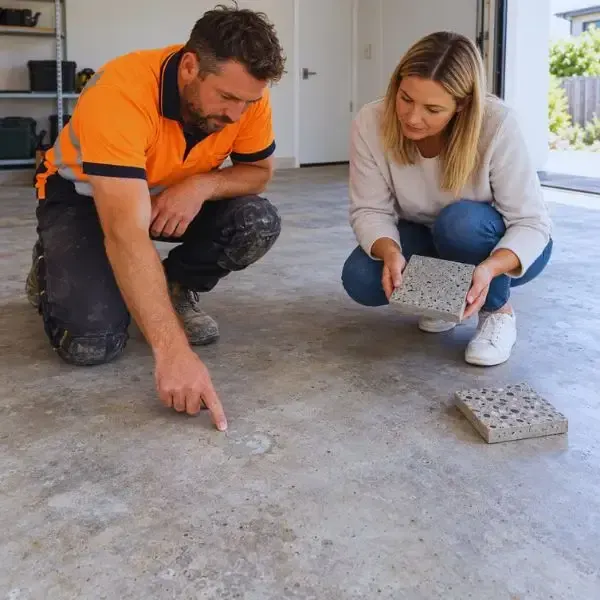
A contractor inspects a concrete floor crack while a homeowner compares polished concrete finish samples.
  • Identify whether the project involves an existing floor, a newly poured slab, or a previously polished surface.


  • Discuss existing cracks, patches, stains, uneven areas, old coatings, and any known moisture concerns.


  • Tell the specialist about underfloor heating, embedded services, previous repairs, and available slab information.


  • Choose the preferred amount of visible stone, such as minimal exposure, salt and pepper, medium exposure, or fuller aggregate exposure.


  • Aggregate exposure and sheen are separate choices. More visible stone does not automatically mean a glossier floor.


  • Reference photographs help explain a preferred appearance, but the actual slab determines the stone, colour, and variation available.


  • A trial area may help establish realistic expectations where the existing concrete or desired result is uncertain.


  • For new slabs, discuss the intended polished finish before placement and coordinate treatment timing with the concrete and flooring specialists.


For newly poured slabs, confirm treatment readiness with the specialist before scheduling grinding or protective finishes. To understand how curing and moisture loss affect timing, read Concrete Curing & Drying Times.

Preparing The Area And Removing Existing Coverings

Preparation creates access to suitable concrete while protecting adjoining areas. The removal method depends on existing coverings, surface contamination, equipment access, and identified hazards.
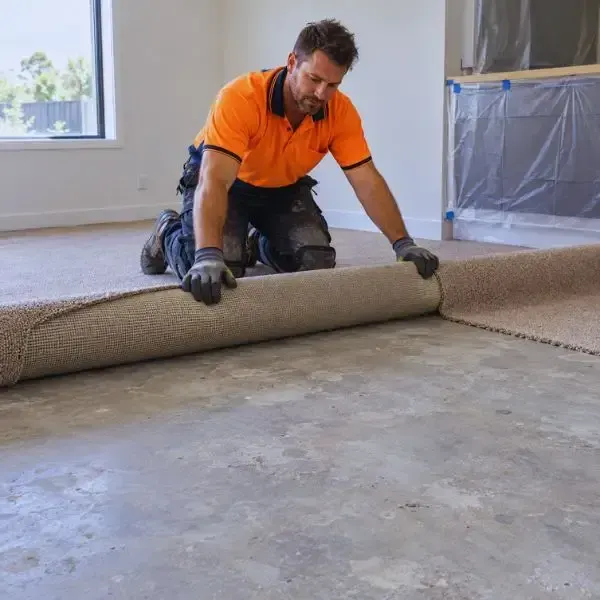
Contractor rolling back carpet to expose a concrete floor, with nearby cabinetry covered in protective plastic.
  • Agree on who will remove furniture, stored items, appliances, and other obstacles before the specialist arrives.


  • Confirm access for machinery, suitable power, and any water or waste-collection arrangements the selected method requires.


  • Protect nearby walls, cabinetry, doorways, and adjoining finishes that the work could affect.


  • Assess suspect older flooring, backing, or adhesive before disturbing it; unidentified suspect materials should not simply be ground away.


  • Remove suitable coverings, adhesive residues, or coatings using methods appropriate to the material and proposed floor system.


  • Address oil, grease, and other contamination that could interfere with the selected treatment.


  • Establish dust extraction or wet-work controls and suitable collection arrangements before abrasive preparation begins.


  • Allow for additional findings after removing coverings, including repairs or staining that were previously concealed.


Approval considerations, older floor coverings, noise, dust, and waste arrangements are explained further in Concrete Grinding & Polishing Council Regulations.

Grinding The Surface And Revealing Aggregate

Initial grinding removes surface material and establishes the achievable aggregate exposure. Tool selection, slab hardness, existing levels, and edge access influence how the work progresses.
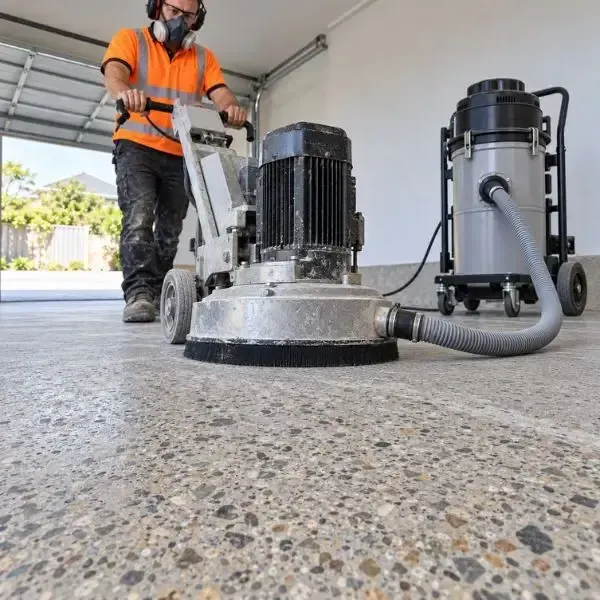
Contractor operating a floor grinder connected to a dust extractor on concrete with visible aggregate.
  • Floor grinders use diamond tooling selected for the concrete and the material being removed.


  • A more substantial initial grind may be required for coating removal, surface correction, or greater aggregate exposure.


  • Grinding reveals the stone already within the slab. It does not replace that stone with a different decorative aggregate.


  • Uneven concrete and variations in aggregate distribution can create inconsistent exposure across the floor.


  • Pursuing a particular appearance must remain compatible with the slab, reinforcement cover, joints, and embedded components.


  • Edges, corners, and areas around fixed fittings may require smaller equipment and more detailed work.


  • Grinding can address some surface irregularities, but significant movement, structural damage, or major level differences require separate assessment.


  • The specialist reviews the surface as it develops before moving to finer abrasive stages.


The amount of preparation, aggregate exposure, edge work, and repair can influence the project budget. These factors are covered in Concrete Grinding & Polishing Cost & Prices.

Repairs, Surface Grouting And Densifying

Repairs, grouting, and densifying serve different purposes. Their inclusion and timing depend on the slab, visible defects, tooling response, and the chosen polishing system.
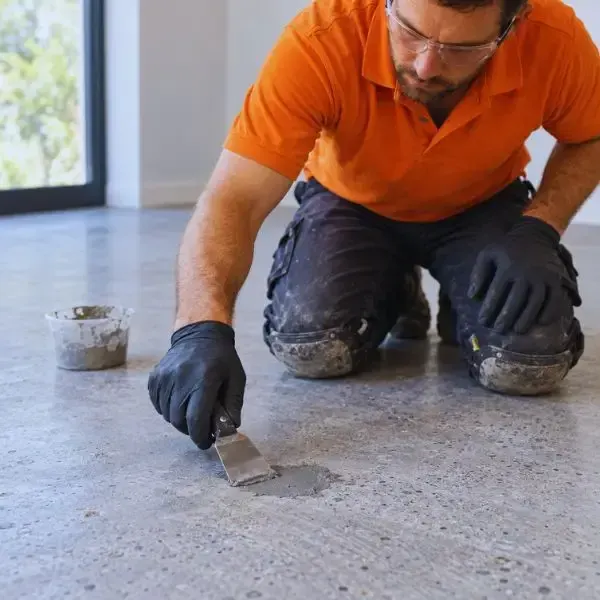
A contractor uses a steel filling knife to smooth grey repair material into a small defect in a concrete floor.
  • Cracks and damaged areas are assessed to distinguish suitable cosmetic repairs from problems requiring further investigation.


  • Compatible repair materials may be used where appropriate, although repaired areas can remain visible in the finished floor.


  • Surface grouting can fill small pores and pinholes exposed during grinding, helping refine the appearance where included in the specification.


  • Grouting differs from repairing significant cracking or addressing slab movement.


  • A densifier is a treatment used in many polishing systems to harden the concrete surface and improve wear resistance.


  • A densifier is not the same as a decorative surface coating, and it should not be assumed to provide complete stain protection.


  • Repairs, grouting, and densifying may occur between abrasive stages rather than as one uninterrupted operation.


  • Product compatibility, application requirements, and necessary waiting periods guide when refinement can continue.

Honing And Polishing The Concrete

Honing and polishing progressively refine the ground surface. Successive abrasive stages reduce earlier scratches and develop the smoothness and sheen agreed for the floor.
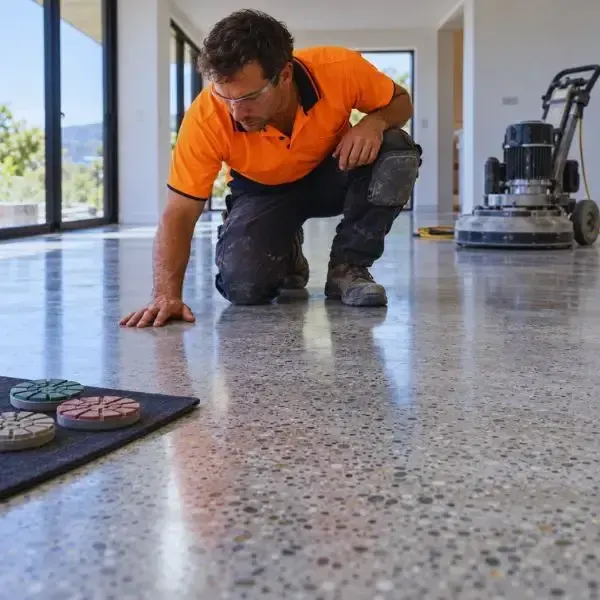
Contractor inspecting a polished concrete floor, with polishing pads nearby and a floor-polishing machine behind.
  • Honing uses finer abrasives to refine the marks left by earlier grinding stages.


  • Further polishing develops the selected finish as part of the agreed system.


  • The specialist checks the surface between stages rather than assuming that one quick pass will produce the required result.


  • Cleaning between stages helps remove debris that could interfere with the next abrasive pass.


  • Edges and detailed areas also need attention so they match the main floor.


  • The number of stages and final abrasive grade vary with the concrete, equipment, system, and intended result.


  • Polishing-only projects can start with less aggressive preparation where the existing floor is suitable; the service name does not guarantee that all earlier work can be skipped.


  • Grind-and-seal projects follow the preparation requirements of their coating. Increasingly fine polishing is not automatically appropriate for coating adhesion.

Final Protection, Return To Use And Care

The completed floor needs protection and care suited to its finishing system. The handover should clarify appearance, cleaning, access restrictions, and when normal use can resume.

A contractor reviews a floor-care sheet with a homeowner while standing on a polished concrete floor.
  • Mechanically polished floors may receive a compatible guard or stain-protection treatment where specified.


  • Grind-and-seal floors receive the agreed protective coating, which contributes to their final appearance and maintenance requirements.


  • Any final burnishing or additional finishing follows the selected product system rather than a universal procedure.


  • Review the completed floor against the agreed expectations, including natural variation, visible repairs, edges, and transitions.


  • Confirm when people, furniture, equipment, or vehicles can return, as these may require different waiting periods.


  • Slab curing, treatment drying, and return-to-use times vary. Follow the specialist’s instructions even when the floor looks finished.


  • Obtain cleaning instructions suited to the actual floor system, including suitable products, spill removal, and protection beneath furniture.


  • Future maintenance should respond to the treatment and wear conditions rather than an assumed universal resealing schedule.


For more detail on densifiers, protective guards, and how mechanically polished floors differ from grind and seal, explore the ground and polished floor protection section of What Concrete Surfaces Should Be Sealed?

Next Steps For Concrete Grinding & Polishing

Ready to explore a ground or polished concrete floor? The right process depends on the slab’s condition, existing coverings, preferred aggregate exposure, selected sheen, intended use, and the preparation and protection needed.


Visit our Concrete Grinding & Polishing page to explore treatment options, view before-and-after examples, understand the quote process, and see which project details help prepare for a site assessment.


To take the next step, call 04 242 0311 or fill out our CONTACT FORM for your FREE QUOTE!

Business Hours & Contact

Mon - Fri

7:00 am - 5:30 pm

Saturday

7:00 am - 3:00 pm

Sunday

Closed

Social Media Accounts

Lower & Upper Hutt Concrete Services Logo - Footer Section.

CLM Connect Limited Owned

Lower & Upper Hutt Concrete Services is a local service marketing and coordination channel managed by CLM Connect Limited.


Physical concrete work is completed by independent concrete contractors or service providers.

© 2026 Lower & Upper Hutt Concrete Services | All Rights Reserved