L/C Concrete Services In Lower Hutt, Wellington.

What Is Epoxy Coating And Where Is It Best Used?

Quick Answer: Epoxy floor coating combines resin and hardener to form a bonded protective layer over prepared concrete. It provides durable, easy-to-clean surfaces in garages, workshops, warehouses, and commercial interiors. Suitability depends on concrete condition, moisture, sunlight exposure, and intended use.

Understanding Epoxy Coating And Its Best Uses In The Hutt Valley

Lower & Upper Hutt Concrete Services explains epoxy floor coatings across Lower Hutt, Upper Hutt, and Wellington. Learn how epoxy works, how finishes differ, what suits garages, workshops, and commercial spaces, and the installation and everyday care requirements.

Lower & Upper Hutt Concrete Services Logo - What Is Epoxy Coating And Where Is It Best Used? Article.

What Is Epoxy Floor Coating?

Epoxy flooring starts as separate resin and hardener components. When mixed in the specified proportions, they react and cure into a solid coating bonded to the prepared surface.
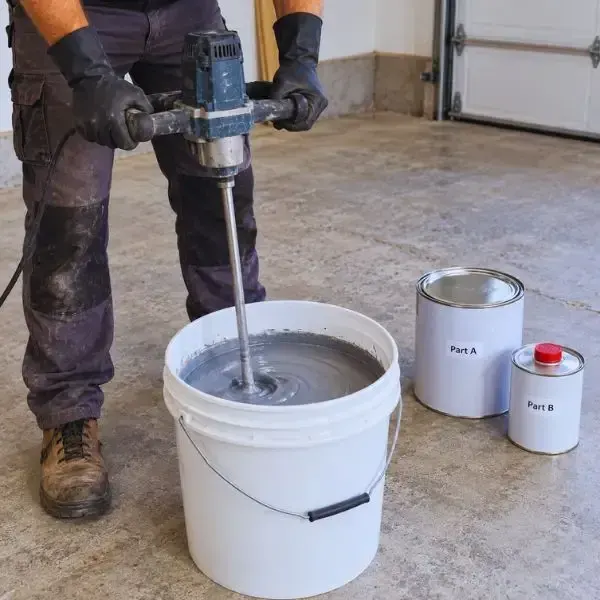
A gloved flooring specialist mixes grey epoxy coating beside resin and hardener containers on a concrete garage floor.
  • Epoxy forms a protective layer over the concrete. It does not replace the slab or correct structural problems underneath.


  • A complete flooring system may include a primer, coating layers, decorative materials, and a compatible protective topcoat. These layers need to work together.


  • Epoxy coatings vary in thickness, application method, and performance. The word “epoxy” alone does not describe everything the finished floor can withstand.


  • A suitable system can make concrete easier to clean and improve resistance to everyday wear and particular spills. Its performance depends on the selected products, surface preparation, and installation.

Epoxy Vs Paint, Sealer And Polished Concrete

These treatments can all change a concrete floor’s appearance, but they work in different ways. Product names also overlap, so it helps to understand what is actually being applied.
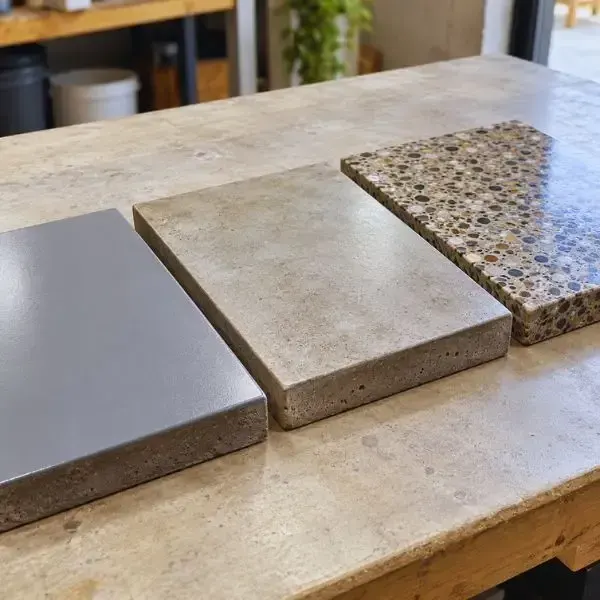
Grey epoxy, clear-sealed concrete, and polished aggregate concrete samples displayed side by side on a workbench.
  • Concrete floor paint: Floor paint is a broad description. Some products are single-component coatings, while others are two-part epoxies. The product specification matters more than the word “paint”.


  • Concrete sealer: Sealers may penetrate the concrete or form a surface film. Depending on the product, they can help with dust control, absorption, or appearance. Some sealers are themselves epoxy-based.


  • Epoxy coating: A pigmented epoxy system creates a new visible finish over the prepared slab. Its colour and appearance come primarily from the coating rather than the concrete underneath.


  • Mechanically polished concrete: Grinding and polishing refine the concrete itself. The slab and any exposed aggregate remain part of the finished appearance, with suitable densifiers and protective treatments used as specified.


  • Grind-and-seal finishes: These combine mechanical preparation with an applied sealer. They can resemble polished concrete, but the surface finish and maintenance requirements differ from a mechanically polished system.


For more detail on finishes that retain the appearance of the concrete and its aggregate, see Concrete Grinding & Polishing.

Smooth Grey, Flake And Coloured Epoxy Finishes

Smooth grey, decorative flake, and coloured epoxy describe different appearances. They do not, by themselves, indicate the coating’s thickness, grip, or wear resistance.
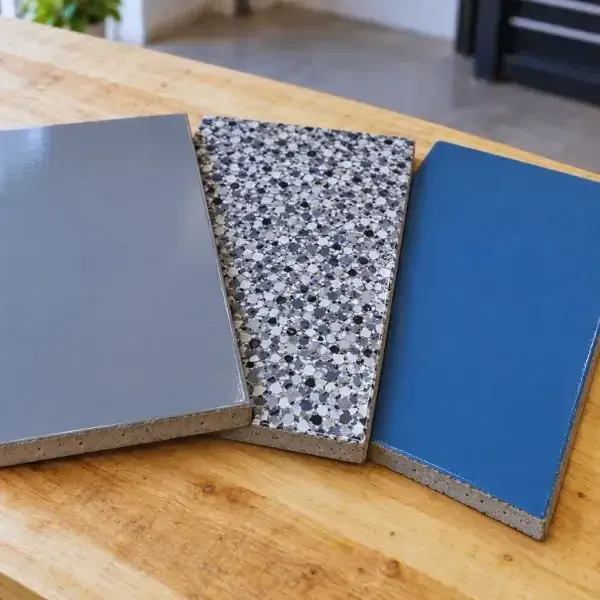
Smooth grey, decorative flake, and blue epoxy finish samples arranged on a wooden workbench.

Smooth grey: A pigmented coating gives the floor a consistent grey appearance. A thin coating generally follows the underlying surface, so “smooth” does not mean uneven concrete has been levelled.


Decorative flake: Coloured flakes are scattered into a wet coating layer and covered with compatible clear coats. Flake size, colour blend, and coverage influence the finished pattern.


Coloured epoxy: Pigments create a solid-colour finish within the available product range. Grey is also a pigmented finish, so choosing another colour doesn't automatically mean choosing a different system.


Protective topcoats: Some systems use a compatible clear or coloured topcoat to provide the required surface properties. This may be a different resin type, rather than another layer of epoxy.


Texture and sheen: Gloss level and surface texture are separate choices from colour. Decorative flakes alone don't determine how much grip the finished floor will provide.

Where Is Epoxy Coating Best Used?

Epoxy is often a good option for indoor concrete floors where a consistent appearance and easy cleaning matter. The system should match the activities taking place, not the room name alone.
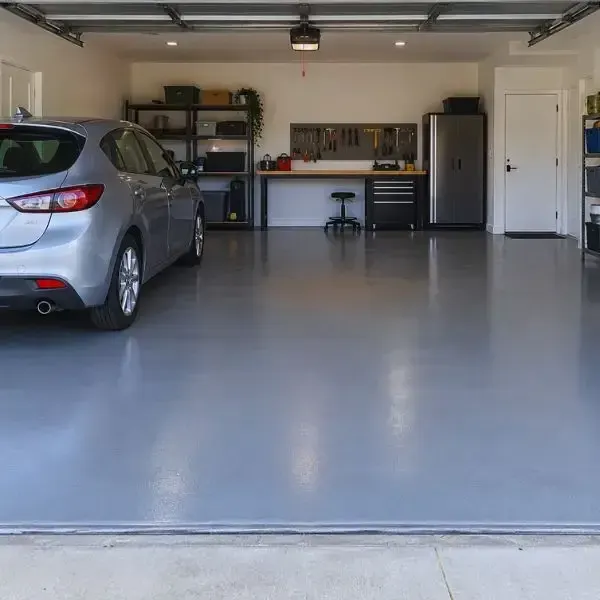
Grey epoxy floor in a residential garage with a parked car, workbench, and organised storage shelves.

Residential garages: A coated floor can provide a tidy surface for parking, storage, and everyday projects. The specification should account for vehicle use, tyres, tracked-in water, and likely spills.


Home and trade workshops: Coatings can make dust and spills easier to manage. Tools, wheeled equipment, chemicals, and concentrated loads influence which system is suitable.


Warehouses and storage areas: Suitable systems can accommodate specified pedestrian and wheeled traffic. Forklifts and heavily used turning areas may require a different coating system from a lightly used storage room.


Showrooms and commercial interiors: A consistent finish can support the presentation of vehicles, products, or customer areas. Appearance needs to balance cleaning, foot traffic, and entrance conditions.


Specialist working environments: Food preparation, chemical handling, and other demanding uses need purpose-designed flooring. A standard garage specification should not be assumed suitable for every commercial application.


For new or replacement garage floors, plan the slab and its future surface treatment together. Related information is covered in Shed & Garage Concrete Slabs.

When Epoxy May Not Be The Right Choice

A coating cannot solve every problem in an existing floor. Some surfaces need further investigation, repairs, or a different treatment before you can select a suitable finish.
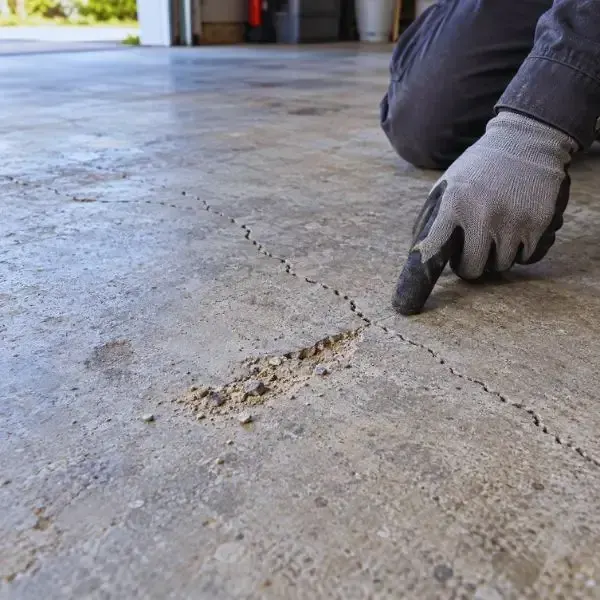
A gloved hand inspects a crack and chipped concrete on a garage floor before epoxy coating.
  • Moisture moving through a slab can affect adhesion and cause coating problems. Some systems include moisture-management products, but these must suit the measured conditions.


  • Loose surfaces, significant deterioration, and active cracks need assessment. A rigid coating is not a structural repair, and movement can show through the finished surface.


  • Oil or other substances absorbed into concrete can make reliable bonding difficult. Cleaning the visible surface may not be enough.


  • Many epoxy products can discolour under UV exposure. A compatible topcoat may improve performance, but it does not automatically make an indoor system suitable for outdoor use or prevent all colour change.


  • Hot washdowns, certain chemicals, or heavy impacts may require a different resin system. Suitability should be checked against the actual exposure.


  • An epoxy coating does not automatically remove slopes, flatten a floor, or hide every repair. Any required levelling or substantial surface correction needs to be planned separately.


Projects involving garage conversions, drainage changes, or other building work may raise questions beyond the finish itself. These are explained in Epoxy Coating Council Regulations.

How An Epoxy Flooring System Is Installed

Installation involves a planned sequence, with each stage preparing the floor for the next. The exact method depends on the existing concrete and the selected coating system.
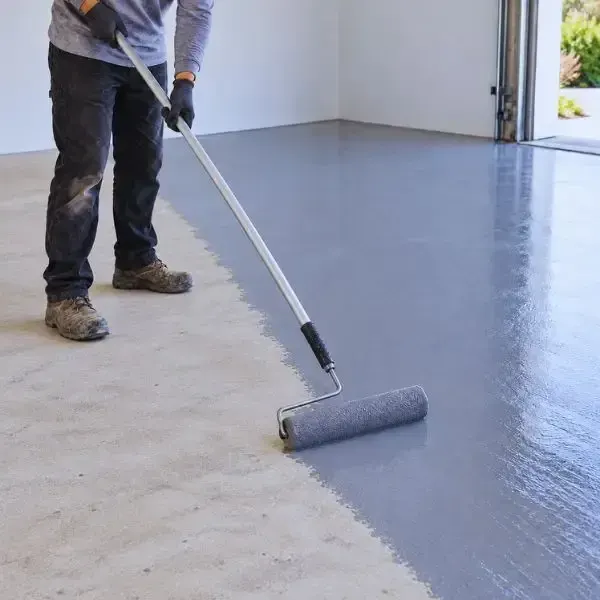
A contractor is applying grey epoxy to a garage floor with a long-handled roller while standing on uncoated concrete.
  • The floor is assessed for surface condition, existing finishes, moisture, and intended use before a suitable approach is confirmed.


  • Mechanical preparation, such as grinding or shot blasting, removes unsuitable surface material and creates the texture required for bonding. Dust and contamination must also be removed.


  • Suitable cracks, holes, and damaged areas are treated as specified. Movement joints require appropriate detailing rather than being simply coated over.


  • Primer and coating layers are applied according to the manufacturer’s instructions. Decorative flakes, textured materials, or compatible topcoats are incorporated where included in the system.


  • Temperature, humidity, mixing, working time, and the interval between coats all affect installation. The floor may look ready before the next stage is permitted.


  • Walking access, vehicle use, and full chemical exposure may have different curing periods. A surface that feels dry is not necessarily ready for normal use.

Living And Working With An Epoxy Floor

An epoxy floor can be straightforward to maintain, but it still needs regular care. Cleaning habits and how equipment moves across the surface affect how the finish wears.
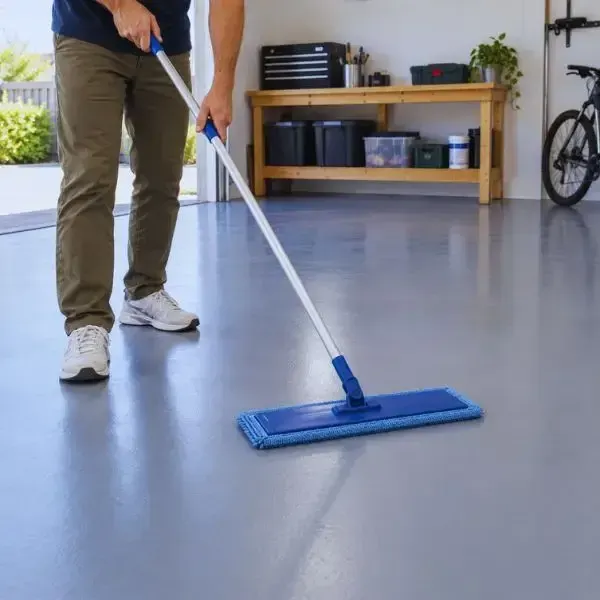
A person is cleaning a grey epoxy garage floor with a flat microfibre mop beside a tidy workbench.
  • Regular sweeping or vacuuming removes abrasive grit before shoes, tyres, or wheels repeatedly drag it across the coating.


  • Spills should be cleaned promptly. Resistance to a substance does not mean it can remain on the floor indefinitely.


  • Cleaners, brushes, and pads need to be compatible with the finish. Aggressive chemicals or abrasive equipment can damage the surface.


  • Dragging heavy items or sharp metal edges can scratch or damage the coating. Suitable wheels and protective contact points help reduce local wear.


  • Busy areas should be checked for chips, peeling, or worn patches. Recoating may be possible after assessing adhesion, compatibility, and preparation needs.


  • Service life varies with the system, installation, traffic, and maintenance. No single lifespan applies to every epoxy floor.

Choosing A Finish And System For Your Space

The way a floor will be used should guide the system selection, with appearance considered alongside practical needs. A colour sample alone doesn't show how the finished floor will perform.
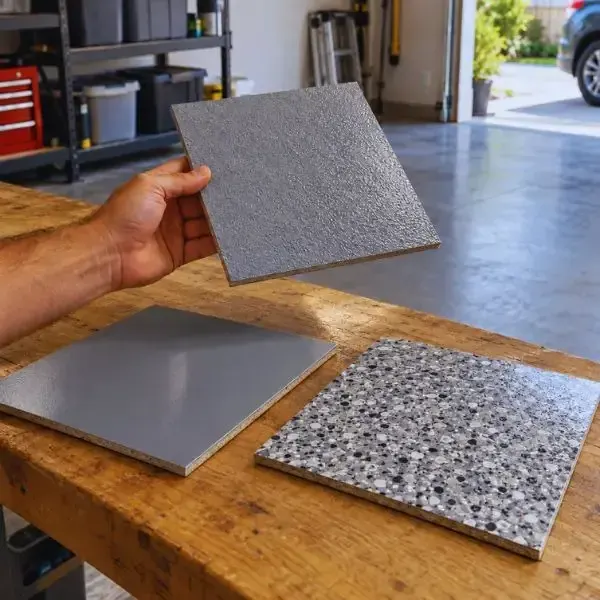
A hand holds a textured grey epoxy sample beside smooth grey and decorative flake samples on a garage workbench.
  • Ordinary parking and storage areas place different demands on a floor from frequent trolley traffic, machinery, chemical exposure, or wet working conditions.


  • A more textured finish may improve traction in the intended conditions, but it can require a different cleaning method from a smoother surface.


  • Colour, flake coverage, texture, and sheen should be considered together. Photographs alone may not show how the finish will look under the room’s lighting.


  • Cleaning requirements and future repairs or recoating also matter when comparing suitable systems.


The selected finish, required performance, and concrete condition all influence the overall budget. These factors are covered in Epoxy Coating Cost & Prices.

Next Steps For Your Epoxy Coating Project

Considering epoxy for your garage, workshop, or commercial floor? Share your floor’s approximate size, current condition, intended use, and preferred finish so a specialist can recommend the best options.


Explore Epoxy Coating for service information, before-and-after examples, finish guidance, and how we help arrange a site assessment and specialist quote.


To take the next step, call 04 242 0311 or fill out our CONTACT FORM for your FREE QUOTE!

Business Hours & Contact

Mon - Fri

7:00 am - 5:30 pm

Saturday

7:00 am - 3:00 pm

Sunday

Closed

Social Media Accounts

Lower & Upper Hutt Concrete Services Logo - Footer Section.

CLM Connect Limited Owned

Lower & Upper Hutt Concrete Services is a local service marketing and coordination channel managed by CLM Connect Limited.


Physical concrete work is completed by independent concrete contractors or service providers.

© 2026 Lower & Upper Hutt Concrete Services | All Rights Reserved