L/C Concrete Services In Lower Hutt, Wellington.

Concrete Driveway Cost & Prices In Lower Hutt & Upper Hutt

What To Expect From Concrete Driveway Pricing In The Hutt Valley

Lower & Upper Hutt Concrete Services shares driveway pricing information across Lower Hutt, Upper Hutt, and Wellington. Compare finish rates, replacement costs, preparation, drainage, vehicle use, access, and quote details before site visits.

Lower & Upper Hutt Concrete Services Logo - Concrete Driveway Cost & Prices Article.

Quick Concrete Driveway Pricing Overview

Concrete driveways are often priced per square metre, but the final quote covers the whole project. Finish, preparation, access, drainage, thickness, vehicle use, and existing surfaces can affect costs equally.

Indicative Concrete Driveway Pricing Per M², Excluding GST

Driveway FinishIndicative Price RangeMain Pricing Considerations
Plain Concrete$130 to $160 per m²Preparation, thickness, access, reinforcement, and site conditions
Broom Finish$140 to $170 per m²Brushed texture, driveway slope, traction, and finishing time
Swirl Finish$140 to $170 per m²Pattern consistency, labour, driveway layout, and finishing conditions
Exposed Aggregate$165 to $200 per m²Aggregate mix, oxide, washing, exposure timing, and sealing
Coloured Concrete$165 to $200 per m²Pigment choice, colour strength, finishing, consistency, and sealing
Stamped Concrete$175 to $215 per m²Pattern, colour treatments, detailed labour, sealing, and installer skill

These prices exclude GST and are intended as general starting ranges only. Costs can increase when a driveway requires extensive removal, deeper preparation, difficult access, concrete pumping, drainage work, heavier-vehicle specifications, or council-related work.


For a rough estimate based on the driveway area and selected finish, use our Concrete Driveway Cost Calculator before arranging contractor quotes.
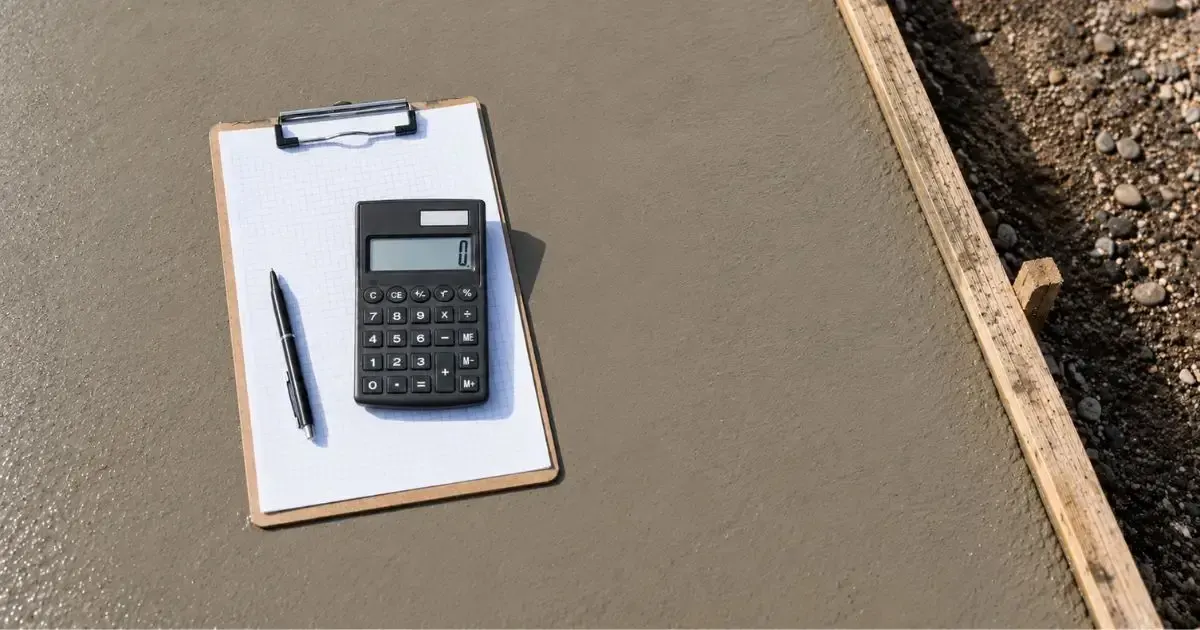
Concrete driveway cost calculator, clipboard and pen beside fresh concrete in Lower Hutt & Upper Hutt, Wellington.

Example Driveway Costs By Size

Multiplying the driveway area by an indicative per-m² rate gives an early budget range. These examples exclude GST, unusual excavation, restricted access, pumping, drainage alterations, council costs, and site-specific extras.

Example Concrete Driveway Estimates, Excluding GST

Approximate Driveway AreaPlain ConcreteBroom Or Swirl FinishExposed Aggregate Or Coloured ConcreteStamped Concrete
30m²$3,900 to $4,800$4,200 to $5,100$4,950 to $6,000$5,250 to $6,450
50m²$6,500 to $8,000$7,000 to $8,500$8,250 to $10,000$8,750 to $10,750
80m²$10,400 to $12,800$11,200 to $13,600$13,200 to $16,000$14,000 to $17,200

Note: Concrete driveways of around 100 m² or more may receive a lower effective per-m² rate because setup, machinery, delivery, and labour costs are spread across a larger area. This is not guaranteed, and a site-specific quote is still required.


A smaller driveway of around or below 20m² can still fall within the Hutt Valley’s indicative $2,500+ (excluding GST) small-job starting point. Excavation, base preparation, boxing, reinforcement, concrete delivery, and finishing can make compact driveway jobs relatively expensive per square metre. This is not a fixed minimum, and the contractor will confirm the actual cost after inspecting the site.

New Driveway Versus Replacement Costs

A new driveway and a replacement driveway can have the same finished area but require very different amounts of removal and site work. This can significantly change the final installation price.

  • A new driveway over lawn or soil may require excavation, topsoil removal, basecourse, compaction, boxing, and drainage planning.
  • An existing gravel driveway may contain usable base material, but its depth, compaction, drainage, and overall condition still need to be checked.
  • An asphalt driveway may require cutting, lifting, loading, cartage, and disposal before the ground beneath it is prepared.
  • An old concrete driveway may need saw cutting, breaking, machinery, cartage, and disposal.
  • Existing pavers may need to be lifted and removed before the underlying base is inspected.
  • A driveway extension must connect correctly with existing concrete, garages, paths, kerbs, lawns, and drains.
  • Widening a driveway entrance may affect boundaries, retaining edges, drainage, the vehicle crossing, or nearby public land.
  • Unexpected tree roots, soft ground, buried material, or damaged drainage can add work after removal begins.

Preparation, Access And Site Conditions

Preparation and access affect how the driveway base is formed, how machinery reaches the work area, and how fresh concrete is placed, directly affecting the final project quote.

  • Excavation creates room for the basecourse and planned concrete thickness.
  • Soft, wet, loose, or unstable ground may require additional excavation and replacement material.
  • Basecourse may need to be supplied, shaped, levelled, and compacted.
  • Boxing forms the driveway edges, curves, transitions, and finished layout.
  • Reinforcing mesh or steel may be included depending on the driveway design.
  • Small digger access can be restricted by gates, carports, fences, walls, overhead lines, or narrow entrances.
  • Concrete trucks may not be able to discharge directly into the prepared driveway area.
  • Fresh concrete may need to be transported by chute, wheelbarrow, buggy, or pump.
  • Steep, curved, narrow, multi-level, or elevated driveways can require more labour and setup.
  • Rainfall, soft ground, slope, frost, and local terrain may influence preparation and timing.


The full preparation breakdown covering excavation, GAP20, GAP40, compaction, boxing, and reinforcement is available through Concrete Preparation & Basecourse.


Local ground, weather, access, and terrain are explored from a Hutt Valley perspective in Concrete Work In The Hutt Valley.

Driveway Thickness, Strength And Vehicle Loads

The vehicles using the driveway can affect the required concrete volume, thickness, strength, reinforcement, and preparation. These choices also influence the final project price.

  • Regular cars create different demands from utes, vans, trailers, caravans, boats, trucks, or machinery.
  • Repeated turning, braking, and parking place additional pressure on vehicle areas.
  • Garage entrances and tight turning points can experience concentrated vehicle movement.
  • Heavier vehicles may require greater thickness, stronger concrete, additional reinforcement, or deeper preparation.
  • Increasing concrete thickness increases the volume of concrete used per square metre.
  • Soft ground or old fill may require more substantial preparation beneath the driveway.
  • A higher MPa rating does not replace suitable thickness, compaction, drainage, reinforcement, or workmanship.
  • Quotes should be compared using the same intended vehicle use and driveway specification.


For a plain-English explanation of 20 MPa, 25 MPa, 30 MPa, and how concrete strength relates to vehicle use, read What Does MPa Mean In Concrete?

Drainage, Levels And Council-Related Costs

Driveway levels should direct water appropriately and connect sensibly with garages, paths, kerbs, drains, and surrounding ground to reduce avoidable problems before pricing is finalised.

  • Existing low spots or ponding areas may need to be corrected.
  • The driveway may require channel drains, strip drains, sumps, or other drainage features.
  • Finished levels should avoid sending water toward the home, garage, neighbouring property, or shared access.
  • Drainage connections may need to be checked before the driveway layout is confirmed.
  • Underground stormwater, wastewater, water, power, gas, or communication services can affect excavation.
  • A new or altered driveway entrance may affect the existing vehicle crossing.
  • Work involving the berm, footpath, kerb, channel, or road corridor may require council checks.
  • Vehicle-crossing inspections, approval costs, deposits, or traffic management can affect the final price.
  • Shared driveways, cross-lease properties, and tight boundaries may require additional planning.


This article focuses on how these issues can affect pricing. Detailed information on stormwater, vehicle crossings, public land, road corridors, and approvals is covered in the Concrete Driveway Council Regulations.

Typical Driveway Prices By Finish

Different finishes require different materials, labour, timing, techniques, and possible sealing allowances, which can noticeably change the final driveway cost.

  • Plain concrete generally sits at the lower end of the driveway pricing range.
  • Broom finish requires a consistent brushed texture and is often considered where additional traction is useful.
  • Swirl finishes use curved trowel marks and depend on consistent finishing across the driveway.
  • Exposed aggregate involves selecting stones, carefully exposing the surface, washing, applying an optional oxide treatment, and sealing.
  • Coloured concrete includes pigments or oxides, with pricing affected by the selected colour, pigment strength, quantity, and sealing.
  • Stamped concrete requires pattern mats, colour treatments, careful timing, detailed labour, and sealing.
  • Decorative borders can combine different colours, textures, or finishes around the main driveway.
  • Decorative surfaces may include initial sealing and future resealing costs.


To compare how aggregate selection, surface exposure, washing, oxide options, and sealing can affect pricing, read Exposed Aggregate Concrete Driveway Cost & Prices.


For a closer look at pigment choice, colour strength, quantity, finish selection, and sealing costs, explore Coloured Concrete Driveway Cost & Prices.

Why Small Concrete Driveways Can Cost More Per M2

Small driveway areas can have a higher effective per-m² rate because contractor setup and delivery costs do not decrease in proportion to the area, making early budgeting less predictable overall.

  • Contractors still need to allow for travel, tools, machinery, boxing, labour, finishing, and clean-up.
  • Smaller concrete quantities may attract delivery or small-load charges.
  • Excavation and removal may still require machinery and disposal.
  • Restricted access can increase the labour for hand preparation or concrete placement.
  • Drainage or level corrections can form a large portion of a small project.
  • Driveway extensions and parking pads may still require reinforcement and vehicle-grade preparation.
  • Decorative finishes can increase costs even when the total area is small.
  • Hutt Valley concrete jobs under 20 m² may have an indicative starting price of approximately $2,500+.
  • The $2,500+ figure is not a fixed price or guaranteed minimum.
  • The final quote can increase depending on access, excavation, preparation, thickness, reinforcement, finish, vehicle use, and site conditions.

What Is Commonly Included In Driveway Quotes

Most driveway quotes are based on the work needed to prepare, form, pour, finish, and clean up the area. The exact inclusions should always be checked before accepting a quote.

  • Site inspection and confirmation of the driveway scope.
  • Removal of existing concrete, asphalt, gravel, pavers, lawn, soil, or other material where included.
  • Excavation, basecourse, compaction, boxing, and finished levels.
  • Concrete thickness, MPa strength, supply, and placement.
  • Reinforcing mesh, steel, or other reinforcement included.
  • The selected driveway finish, including colours, aggregates, patterns, or borders.
  • Saw cuts and control joints.
  • Drainage work, channels, connections, or level corrections included.
  • Clean-up, cartage, and disposal.
  • Pumping, sealing, difficult access, vehicle-crossing work, or council-related items where included or separately listed.

How To Read And Compare Driveway Quotes

Driveway quotes should be compared by their full scope, not just by the final total. Two quotes can look similar while allowing for different preparation, thickness, drainage, finishes, or additional work.

  • Check the contractor’s legal business name and NZBN, contact details, and quote reference.
  • Confirm whether GST is included or excluded.
  • Make sure each contractor has measured and priced the same driveway area.
  • Compare the proposed concrete thickness, MPa strength, and reinforcement.
  • Make sure each quote uses the same intended vehicle use and driveway specification.
  • Compare the exact finish, colours, aggregates, patterns, borders, and sealing allowances.
  • Compare any separately priced allowances or exclusions for drainage, access labour, pumping, disposal, or council-related work.
  • Check whether soft ground, additional excavation, roots, unsuitable fill, or underground services may become variations.
  • Review the payment terms, quote expiry, expected timing, exclusions, and variation process.
  • Check any workmanship guarantee or warranty information provided.

Next Steps For Concrete Driveway Costs

Ready to have your concrete driveway project professionally priced? Driveway prices per m² are a useful starting point, but the final cost depends on the driveway area, existing surface, preparation, vehicle use, thickness, reinforcement, drainage, access, finish, site conditions, and what contractors confirm during their site visits.


Visit our Concrete Driveways page to compare available finishes, view completed projects, explore decorative options, understand the quoting process, and learn what information contractors need for your project.


To take the next step, call 04 242 0311 or fill out our CONTACT FORM for your FREE QUOTES!

Business Hours & Contact

Mon - Fri

7:00 am - 5:30 pm

Saturday

7:00 am - 3:00 pm

Sunday

Closed

Social Media Accounts

Lower & Upper Hutt Concrete Services Logo - Footer Section.

CLM Connect Limited Owned

Lower & Upper Hutt Concrete Services is a local service marketing and coordination channel managed by CLM Connect Limited.


Physical concrete work is completed by independent concrete contractors or service providers.

© 2026 Lower & Upper Hutt Concrete Services | All Rights Reserved