

L/C Concrete Services In Lower Hutt, Wellington.

Why Choose Coloured Concrete Over Other Finishes?

Quick answer: Coloured concrete is often chosen when integrated colour, coordinated outdoor styling, and a cleaner decorative tone are important. Plain, broom, swirl, exposed aggregate, or stamped concrete may suit better where simplicity, stronger texture, visible stone, or a patterned finish is preferred.

Comparing Coloured Concrete With Other Finishes In The Hutt Valley

Lower & Upper Hutt Concrete Services compares coloured concrete with other finishes across Lower Hutt, Upper Hutt, and Wellington. See how colour, texture, use, cost, preparation, curing, sealing, and maintenance can shape the right finish choice.

Lower & Upper Hutt Concrete Services Logo - Why Choose Coloured Concrete Over Other Finishes? Article.

What Makes Coloured Concrete Different?

Coloured concrete uses pigment through the mix to create an integrated surface tone, giving outdoor areas decorative colour without making exposed stone or patterns the main feature.
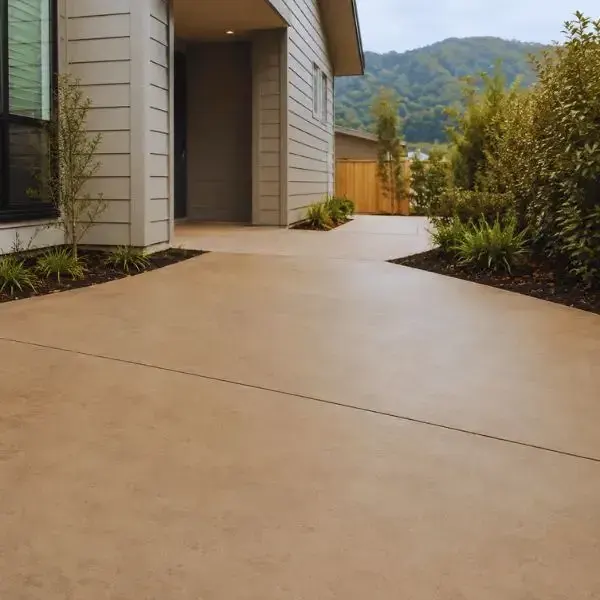
Warm neutral coloured concrete beside a modern home and landscaped garden, showing an integrated decorative surface tone.
  • Pigment is incorporated through the concrete so colour becomes part of the finished surface rather than relying on exposed decorative stone as the main visual feature.


  • Lighter neutrals, warmer earthy shades, cooler greys, and darker charcoal tones can create noticeably different styles around a property.


  • Coloured concrete can coordinate with garages, fencing, cladding, gardens, lawns, entrances, paths, and outdoor living areas.


  • The overall surface can retain a cleaner visual appearance where exposed stone or repeated decorative patterns are not wanted.


  • The selected colour can still be combined with an agreed surface texture or finishing method that suits the project.


  • Using a coordinated colour across adjoining concrete areas can help connect driveways, paths, patios, porches, and entrances.


  • Choosing coloured concrete changes the decorative appearance but does not determine slab strength, thickness, reinforcement, drainage, or preparation requirements.

Coloured Concrete Driveways, Paths, Patios & Porches

Driveways, paths, patios, and porches use coloured concrete differently, with frontage, landscaping, outdoor living, traffic, and surrounding materials shaping the choice of finish.
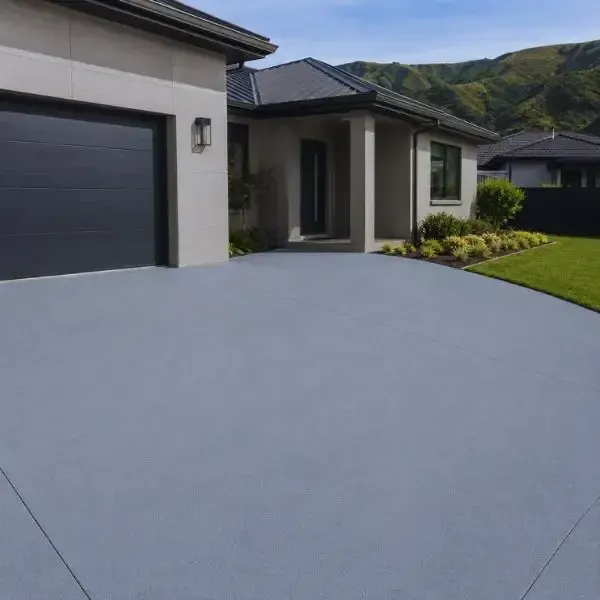
Thunder Cloud coloured concrete driveway and entrance beside landscaped gardens with a cool blue-grey finish.
  • Driveways can use colour as a major part of the street-facing frontage, alongside garages, fencing, lawns, gardens, and parking areas.


  • Paths can use coloured concrete to define walkways through gardens, beside lawns, around homes, and between entrances and other outdoor spaces.


  • Patios can use colour to help establish the appearance of entertaining, seating, BBQ, and everyday outdoor living areas.


  • Porches can use a selected tone to connect doorway and entrance spaces with cladding, paths, steps, and surrounding landscaping.


  • Using the same general colour direction across connected areas can create continuity between driveways, paths, entrances, and patios.


  • Open driveways, shaded paths, covered porches, and sunny patios can make the same general colour appear different under changing light.


  • Vehicle loads, pedestrian traffic, furniture, drainage, access, entrance levels, and surrounding materials still need to be considered for each project area.


Vehicle-focused projects where frontage appearance, parking, garage access, and colour choice matter can be explored further. See Coloured Concrete Driveways.


Entrance routes, garden walkways, side access, and landscaping connections are covered in more detail on Coloured Concrete Paths.


Outdoor living areas, entertaining spaces, covered entrances, and doorway connections are outlined through Coloured Concrete Patios & Porches.

Coloured Concrete Vs Plain, Broom & Swirl

Plain, broom, swirl, and coloured concrete create different levels of colour, texture, and visual detail, depending on how decorative or simple the finished surface should be.
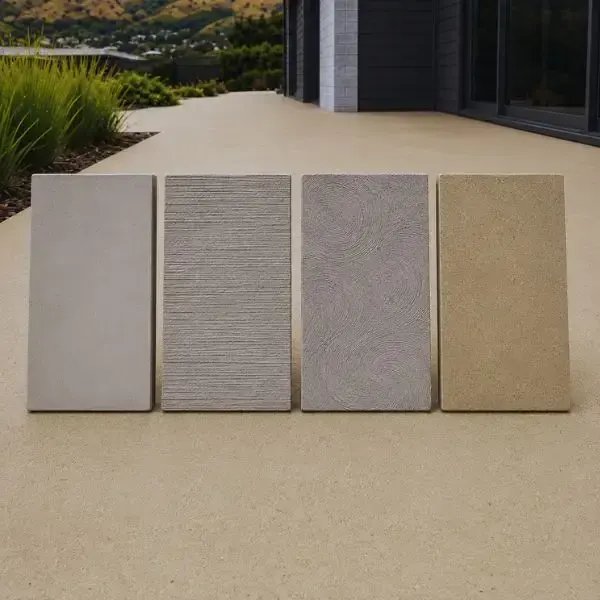
Concrete finish samples showing plain, broom, swirl, and coloured concrete on a patio surface.
  • Plain concrete generally maintains a simpler, cement-based appearance, with decorative colour not the main priority.


  • Broom finishing introduces directional texture while typically retaining a straightforward, practical concrete appearance.


  • Swirl finishing adds visible movement across the cement surface without making an integrated decorative colour the main feature.


  • Coloured concrete introduces a selected tone, making colour part of the overall property design.


  • Coloured finishes may suit projects where the surface should coordinate more closely with cladding, garages, fencing, paving, gardens, or landscaping.


  • Lighter neutral colours can create a restrained appearance, while warmer or darker tones can provide stronger contrast.


  • Selecting coloured concrete does not automatically determine whether the final surface will be broomed, textured, trowelled, or finished using another agreed method.


  • Plain or broom concrete may be more suitable where simplicity and a less decorative appearance are greater priorities.

Coloured Concrete Vs Exposed Aggregate & Stamped

Coloured concrete, exposed aggregate, and stamped concrete create decorative surfaces in different ways through integrated colour, visible stone, or formed patterns and texture.
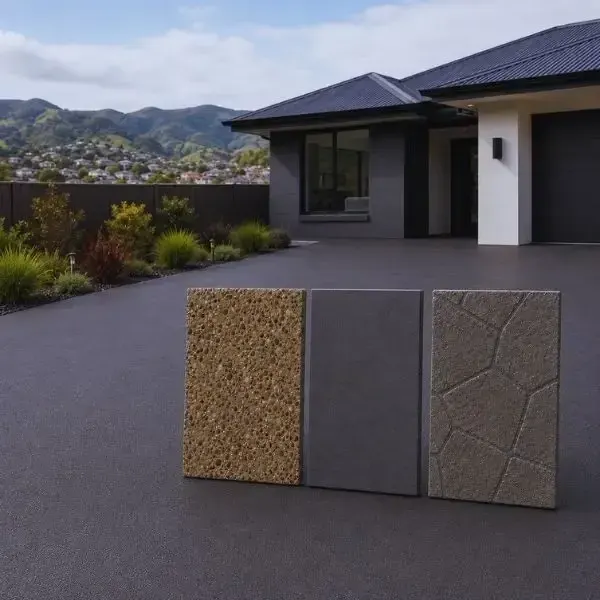
Dark coloured concrete driveway with exposed aggregate, coloured and stamped finish samples beside a modern home.
  • Coloured concrete uses pigment to establish the overall colour and tone of the finished concrete surface.


  • Exposed aggregate makes the natural stones within the concrete an important visible part of the finish.


  • Stamped concrete uses formed patterns and surface texture to create a more decorative patterned appearance.


  • Coloured concrete may suit homeowners who want surface tone and property coordination without exposed stone becoming the dominant feature.


  • Exposed aggregate may suit projects where visible stone, physical texture, and natural aggregate variation are preferred.


  • Stamped concrete may be considered where a defined decorative pattern or replicated texture is the main visual priority.


  • Coloured concrete can create a cleaner colour direction, although batching, curing, materials, weather, and lighting can still produce natural variation.


  • No single decorative finish is automatically best for every property, so the final choice should consider appearance, use, maintenance expectations, and surrounding materials.


For a finish focused on visible stone and natural surface texture, compare Exposed Aggregate Concrete.

Colour Selection, Pigment And Finished Appearance

Pigment choice is only part of the finished colour. Cement tone, batching, finishing, curing, light, weather, and sealing can all influence how coloured concrete appears.
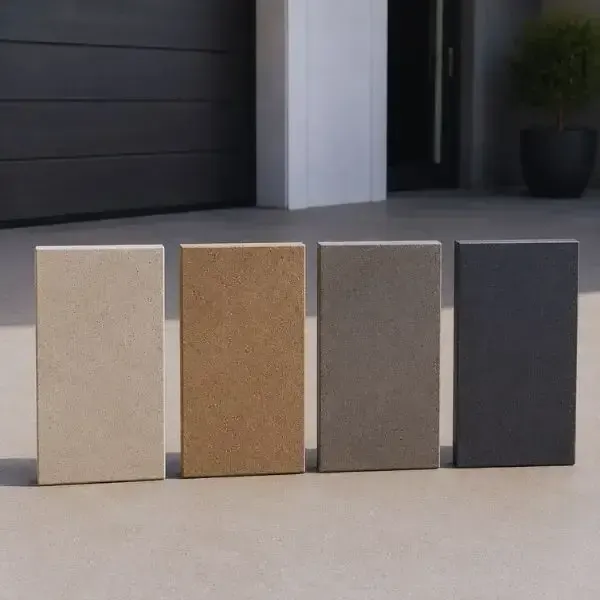
Coloured concrete samples showing light neutral, warm, grey and charcoal pigment tones beside a modern home.
  • Colour options can range from light neutrals and soft greys to warmer earthy shades and deeper charcoal tones.


  • Different pigments or pigment combinations can be used, depending on the selected colour and the supplier's system.


  • Darker finishes may use oxide pigments, including black oxide, depending on the chosen colour.


  • The natural cement colour can influence whether the completed tone appears warmer, cooler, brighter, darker, or more muted.


  • Pigment should be measured for the selected concrete system rather than added by eye.


  • Larger areas can involve multiple concrete loads, making careful batching and reasonable colour consistency more important.


  • Separate loads can still show natural colour differences even when the same general specification is followed.


  • Surface texture can change how light reflects off the concrete and, therefore, how the colour is perceived.


  • Sunlight and shade can make different sections of the same project appear lighter or darker.


  • Fresh coloured concrete should not be expected to show its final appearance immediately after placement.


  • Colour samples, charts, and photographs are useful for selecting a general direction but should not be treated as guarantees of an identical completed surface.


For a deeper look at pigment dosing, batching, mixing, placement, and colour variation, read How Is Coloured Concrete And Pigments Added To Concrete?

Price, Preparation And Overall Value Considerations

Coloured concrete costs depend on more than just pigment. Project size, preparation, access, drainage, concrete specification, finishing, sealing, and site conditions all affect pricing.
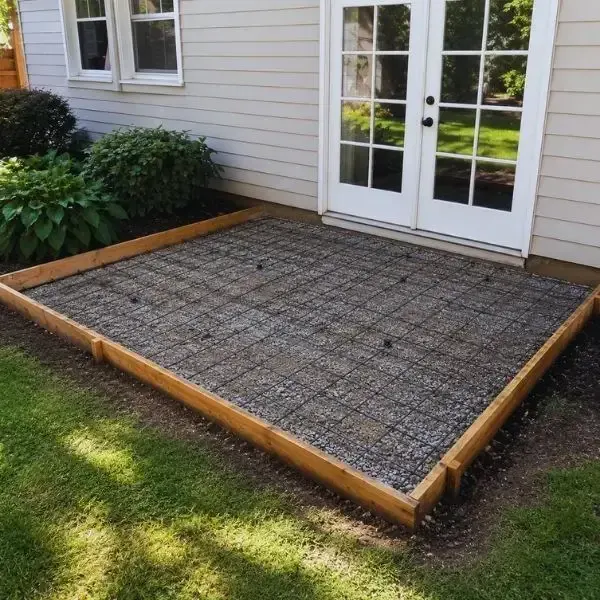
Boxed patio area with compacted basecourse and reinforcement prepared before coloured concrete is poured.
  • Pigment type, colour strength, concrete quantity, decorative details, and finishing can influence the price of supplied coloured concrete.


  • Driveways, paths, patios, and porches can require different thicknesses, reinforcement, base preparation, drainage, and load allowances.


  • Existing concrete, asphalt, pavers, gravel, lawn, soil, decking, or other material may need to be removed before preparation begins.


  • Excavation, base course, compaction, boxing, reinforcement, disposal, and finished levels can account for a significant portion of the total project.


  • Narrow side access, rear patios, enclosed areas, fences, houses, slopes, and landscaping can increase the difficulty of manual handling or placement.


  • Pumping or another placement method may be needed where the concrete truck cannot reach the project area directly.


  • Multiple colours, contrasting borders, detailed edges, curves, or separate sections can add extra materials and finishing work.


  • Matching new coloured concrete beside an older area can be difficult because the existing surface may have cured, weathered, faded, stained, or previously been sealed.


  • Projects with the same square metre area can still receive different quotes because preparation, access, colour requirements, and construction scope can vary.


  • Decorative colour should be considered part of the overall concrete project, rather than assessed separately from the underlying groundwork.


Detailed pricing ranges, project examples, pigment costs, and other quote factors are outlined in Coloured Concrete Cost & Prices.


Groundwork beneath the decorative finish, including excavation, basecourse, compaction, boxing, and reinforcement, can be understood from Concrete Preparation & Basecourse.

Strength, Loads And Curing Are Separate From Colour

Colour changes the surface appearance, but strength, thickness, loads, preparation, drainage, reinforcement, and curing still need to suit the intended concrete project.
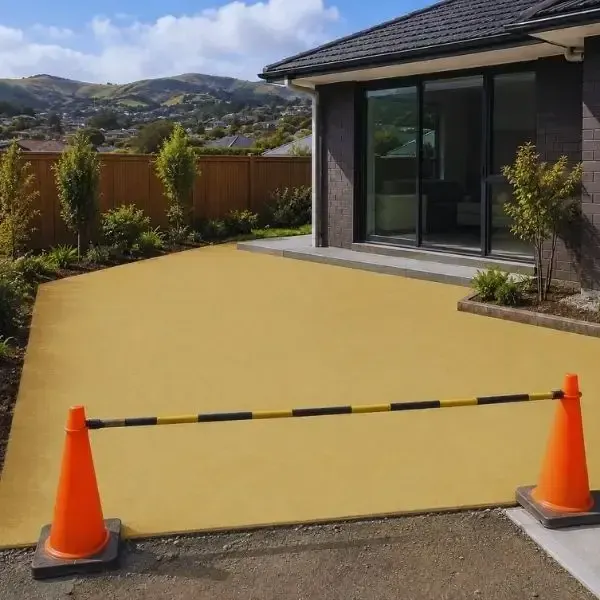
Fresh Indian Summer-coloured concrete patio, closed off with safety cones while the surface cures before normal use.
  • Adding pigment does not automatically make concrete stronger or weaker for its intended use.


  • MPa describes the compressive strength of hardened concrete, rather than whether the surface is coloured, plain, exposed aggregate, or stamped.


  • Concrete strength should be selected around the intended use, expected loads, slab design, preparation, and site requirements.


  • Residential driveways carrying vehicles can require different thickness and preparation from pedestrian-only paths.


  • Patios and straightforward ground-level outdoor areas can have different loading requirements from driveways or structural porch areas.


  • Heavy vehicles, spa pools, fireplaces, outdoor kitchens, concentrated loads, columns, or other features may require additional consideration.


  • A stronger concrete mix cannot compensate for unsuitable ground, inadequate preparation, incorrect slab thickness, drainage problems, or poor workmanship.


  • Newly placed coloured concrete continues gaining strength as the curing process progresses.


  • The visible colour can also continue changing while moisture conditions within and near the surface stabilise.


  • Vehicle access, loading, cleaning, sealing, or other treatments should not be rushed simply because the surface appears finished.


  • Weather, shade, moisture, wind, and temperature can influence curing conditions and the timing before normal use.


Compressive strength, MPa ratings, and how strength differs from surface appearance are explained in What Does MPa Mean In Concrete?


Timing for walking, vehicles, moisture loss, weather, strength development, and sealing is detailed in Concrete Curing & Drying Times.

Maintenance, Sealing And Long-Term Colour Care

The appearance of coloured concrete changes with traffic, sunlight, weather, staining, cleaning, and wear, so maintenance and sealing should consider both protection and colour.
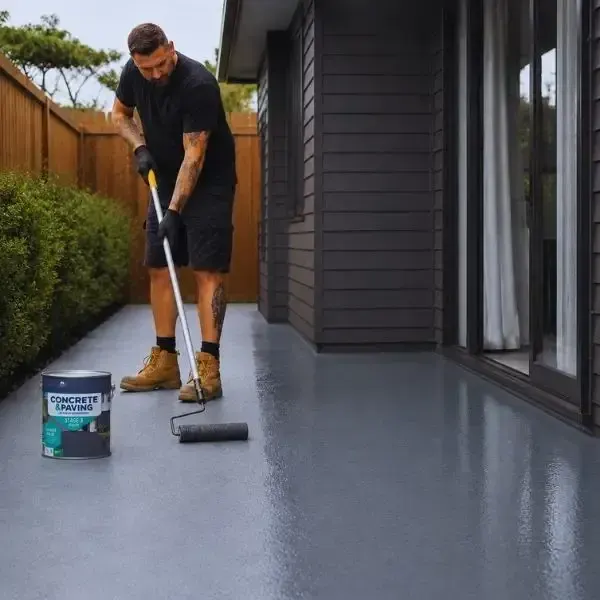
Contractor applying sealer to Thunder Cloud-coloured concrete, with both sealed and unsealed areas visible.
  • Driveways can collect tyre marks, road dirt, oils, vehicle fluids, dust, and other traffic-related contamination.


  • Paths can experience garden soil, moss, leaves, organic material, shade, moisture, and regular pedestrian use.


  • Patios and porches can be exposed to food, drinks, furniture movement, outdoor dirt, changing weather, and regular cleaning.


  • A suitable sealer may reduce liquid absorption and make some staining easier to manage.


  • Some film-forming sealers can deepen the visible colour or introduce a stronger sheen across the surface.


  • Penetrating treatments generally create a less visible surface film, which is preferred when maintaining a more natural appearance is desired.


  • Sealing should not be treated as a guarantee that coloured concrete will never fade, stain, weather, or change tone.


  • Existing coloured concrete should be inspected for contamination, moisture, prior coatings, damage, and overall condition before any further treatment is applied.


  • Wet-surface traction warrants consideration because certain surface coatings can alter how concrete feels when wet.


  • Resealing does not follow one universal timetable because product type, traffic, UV exposure, weather, preparation, and existing condition all matter.


  • Different areas of the same project can wear at different rates, particularly vehicle lanes, entrances, frequently walked paths, and furniture areas.


  • Regular cleaning and suitable maintenance can help preserve the appearance, whether the concrete is sealed or left with a more natural surface treatment.


Long-term protection, colour appearance, sealer selection, wet-surface considerations, and resealing guidance can be found via Coloured Concrete Maintenance And Sealing Information.

Next Steps For Coloured Concrete

Ready to decide whether coloured concrete suits your driveway, path, patio, or porch? The right finish depends on the colour you want, how the surface connects with your property, intended use, preparation, budget, curing, maintenance, sealing, and how coloured concrete compares with other available finishes.


Explore Coloured Concrete to view current colour options, compare residential applications, review pricing, and understand how the quoting process works.


To take the next step, call 04 242 0311 or fill out our CONTACT FORM for your FREE QUOTES!

Business Hours & Contact

Mon - Fri

7:00 am - 5:30 pm

Saturday

7:00 am - 3:00 pm

Sunday

Closed

Social Media Accounts

Lower & Upper Hutt Concrete Services Logo - Footer Section.

CLM Connect Limited Owned

Lower & Upper Hutt Concrete Services is a local service marketing and coordination channel managed by CLM Connect Limited.


Physical concrete work is completed by independent concrete contractors or service providers.

© 2026 Lower & Upper Hutt Concrete Services | All Rights Reserved