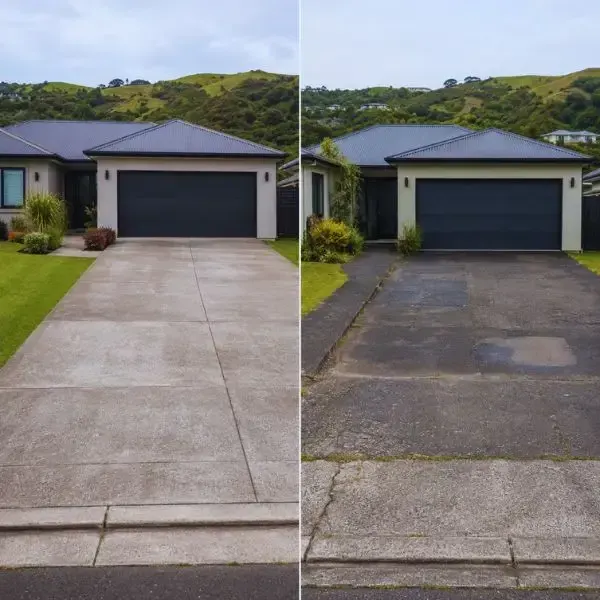
Quick answer: Concrete is generally the stronger long-term choice for residential driveways and paths because it offers greater longevity, defined edges, lower routine maintenance, and more finish options. Asphalt can still suit long, large, or simple vehicle areas where quicker access and a smooth dark surface matter more.
Lower & Upper Hutt Concrete Services compares concrete and asphalt for driveways and paths across Lower Hutt, Upper Hutt, and Wellington. Review lifespan, maintenance, finishes, access time, drainage, and site conditions before choosing.
Concrete and asphalt create practical outdoor surfaces, but they differ in longevity, maintenance, appearance, installation, repairs, and suitability for driveways and paths.
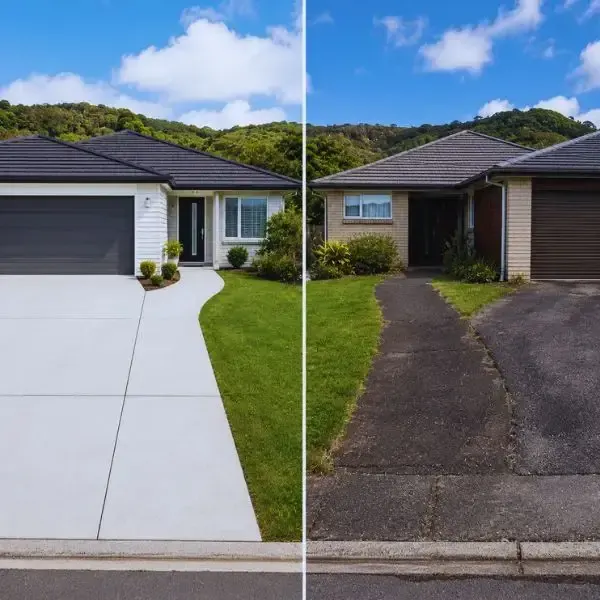
Concrete And Asphalt At A Glance
| Comparison | Concrete | Asphalt |
|---|---|---|
| Initial cost | Depends on preparation, area, thickness, reinforcement, finish, access, and drainage | Depends on preparation, pavement depth, area, edging, access, machinery, and asphalt availability |
| Long-term performance | Commonly chosen for a permanent surface with greater expected longevity | Can perform well but will generally need major surface attention or renewal sooner |
| Routine maintenance | Usually limited, although cleaning, repairs, joint care, or decorative resealing may be needed | Cracks, edges, patches, depressions, and the wearing surface may require ongoing attention |
| Time before use | Requires curing before normal foot and vehicle traffic | Can normally return to use sooner after laying, compaction, and cooling |
| Appearance | Plain, broom, swirl, exposed aggregate, coloured, and stamped finishes | Usually provides a smooth, dark, relatively uniform surface |
| Driveway use | Suits entrances, parking areas, turning areas, carports, and decorative driveways | Suits driveways, car parks, long accessways, and larger simple vehicle areas |
| Path use | Suits narrow paths, curves, steps, patios, gates, and landscaped areas | Can suit long, simple, or shared access paths where appearance is less important |
| Repairs | Local repairs are possible, but colour or texture differences may remain visible | Patching and resurfacing are possible, but repaired areas may remain noticeable |
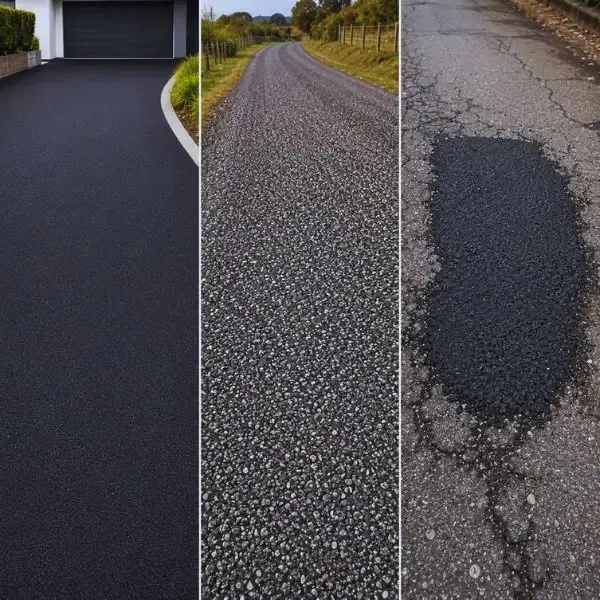
Customers often group hot-mix asphalt, chipseal, and cold mix, but each has different installation methods, purposes, appearances, and maintenance needs.
| Surface | What It Is | Common Purpose | Residential Relevance |
|---|---|---|---|
| Hot-Mix Asphalt | Heated aggregate and bitumen laid and compacted while hot | Driveways, car parks, road surfaces, and larger vehicle areas | This is the main asphalt surface compared with concrete throughout this article |
| Chipseal | Sprayed bitumen covered with stone chips that are spread and rolled into place | Roads, rural accessways, rights of way, and long vehicle routes | Rougher and more textured than hot-mix asphalt and should not be mistaken for the same surface |
| Cold Mix | Premixed asphalt material that can be installed without a full hot-laying operation | Potholes, utility cuts, edge repairs, reinstatements, and remote applications | Mainly a repair material rather than a direct replacement for a complete hot-mix driveway or path |
Hot-mix asphalt creates the smoother black surface normally associated with asphalt driveways. Chipseal has a more visible stone texture, while cold-mix products are generally selected for local repairs rather than complete new residential surfaces.
Initial price is important, but the longer-term cost can also include maintenance, patching, resurfacing, removal, and replacement over the surface's working life.
For Hutt City Council’s explanation of local asphalt road-surface lifespan, maintenance, and rehabilitation timing, see Hutt City Council Road Maintenance.
Driveway area, preparation, vehicle use, and finish rates are broken down in Concrete Driveway Cost & Prices.
Walkway dimensions, replacement work, access, and finish pricing are covered separately through Concrete Path Cost & Prices.
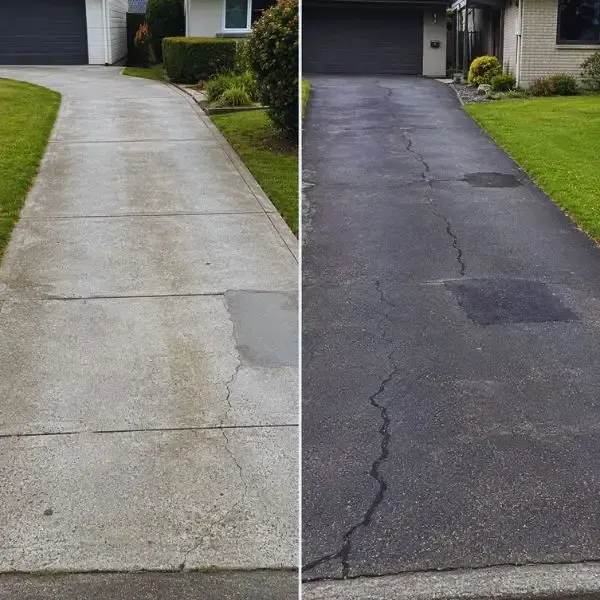
Neither surface is completely maintenance-free. Concrete and asphalt can both crack, shift, stain, or become uneven when exposed to water, roots, traffic, ground conditions, or poor preparation.
Review common driveway and path damage, repair options, and replacement considerations with BRANZ Driveways And Paths.
Asphalt usually provides quicker access after installation, while concrete requires controlled curing so the new surface develops sufficient strength before normal use begins.
Learn how curing conditions affect early foot traffic and vehicle access from Concrete Curing & Drying Times.
Both materials can support residential vehicles when properly designed. The better driveway choice depends on traffic, turning, parking, access, appearance, drainage, and long-term maintenance expectations.
Before changing a driveway entrance, check vehicle crossings, permits, stormwater, and public-asset requirements against Concrete Driveway Council Regulations.
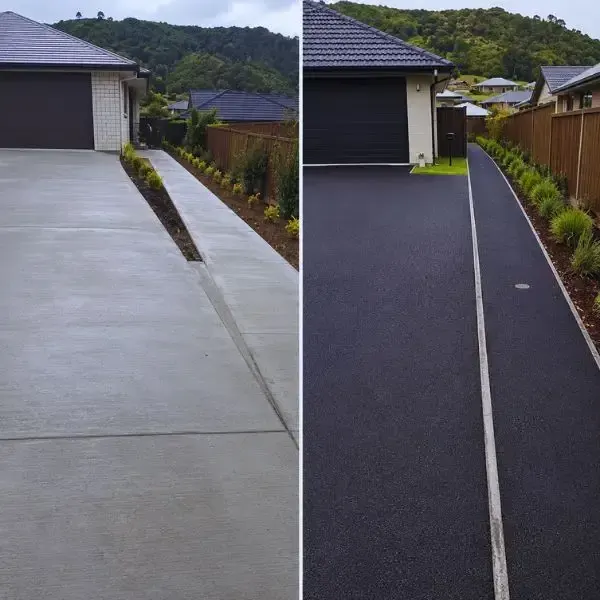
Concrete generally provides greater flexibility for residential paths because it offers defined edges, varied textures, and natural transitions to entrances, steps, patios, gardens, gates, and driveways.
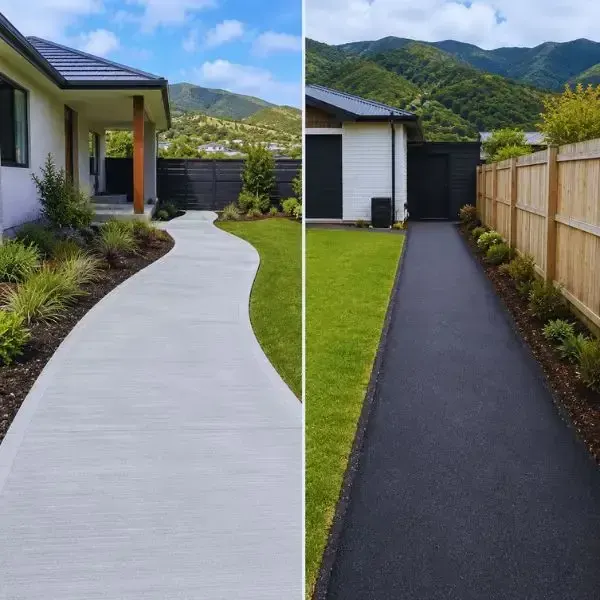
For drainage, boundaries, public connections, and local approval considerations, refer to Concrete Path Council Regulations.
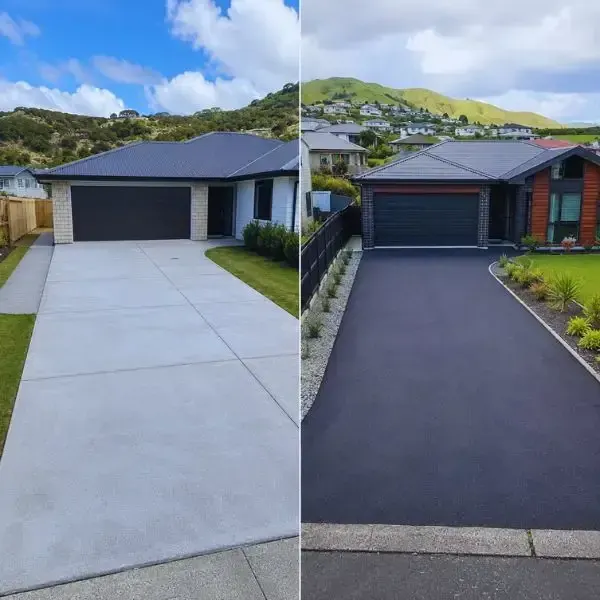
Concrete and asphalt create distinct looks. Concrete offers varied colours, textures, borders, and decorative finishes, while asphalt creates a simpler, uniform surface.
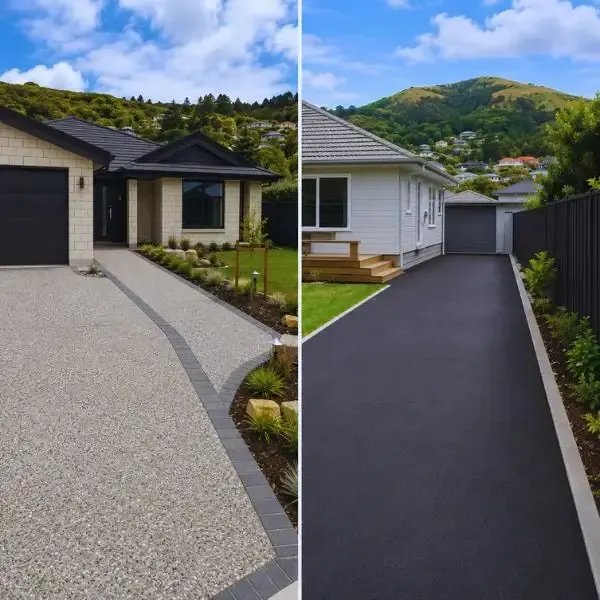
For a decorative finish that brings natural stone texture, visible aggregate, and surface variation to driveways and paths, explore Exposed Aggregate Concrete.
For a decorative option focused on integrated colour, coordinated tones, and matching concrete with the home and surrounding landscaping, discover Coloured Concrete.
Concrete and asphalt both rely on suitable ground preparation and drainage. The finished surface cannot correct weak soil, trapped water, unstable fill, poor levels, or unsuitable pavement support.
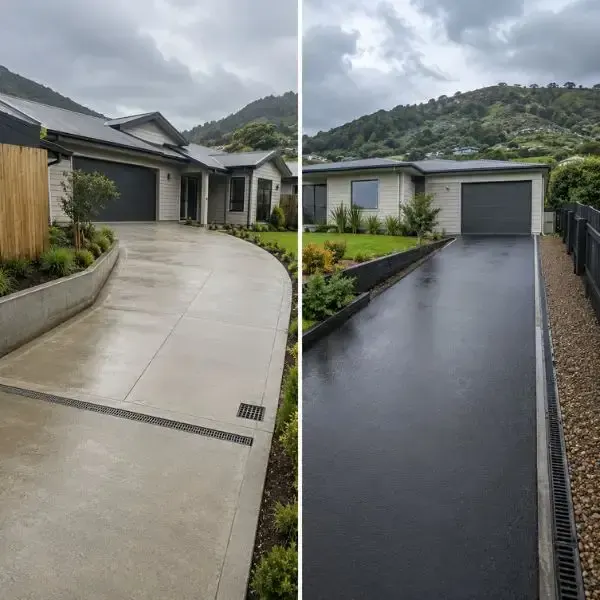
Detailed guidance on excavation, basecourse, compaction, boxing, and reinforcement is available through Concrete Preparation & Basecourse.
Local effects from rainfall, slopes, frost, terrain, and restricted access are explored in Concrete Work In The Hutt Valley.
Concrete offers greater longevity and more finish options, but asphalt can remain a practical choice when project size, installation speed, simplicity, or a uniform dark surface takes priority.
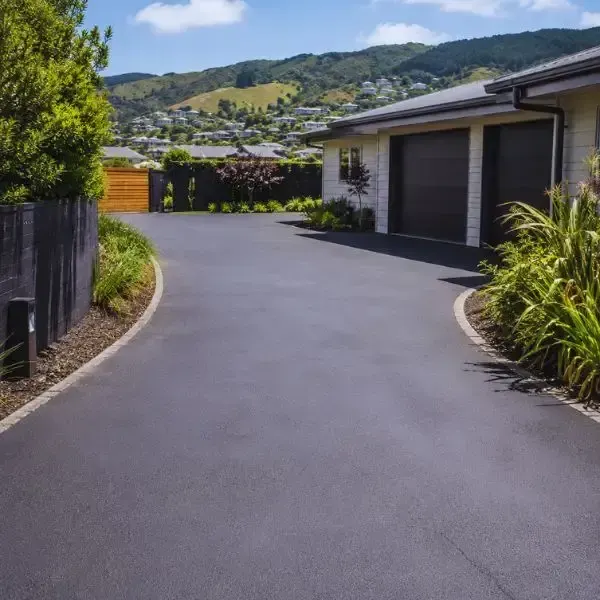
The right surface depends on the area’s purpose, expected traffic, long-term priorities, appearance, maintenance requirements, access, and site conditions.
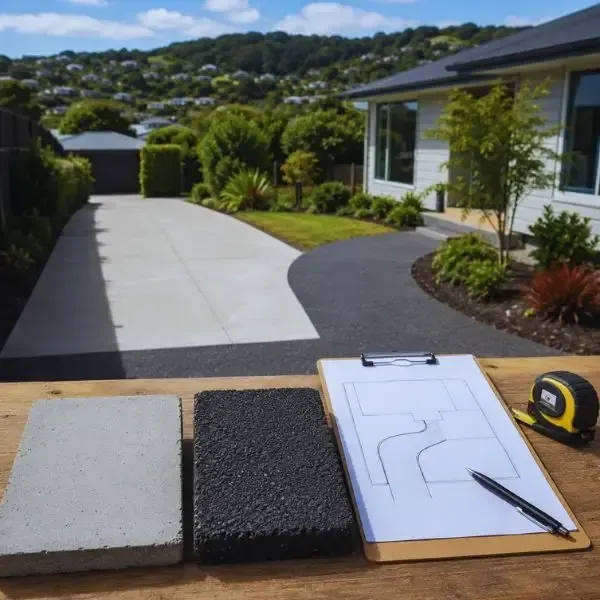
Before choosing between concrete and asphalt, consider:
Ready to compare the options for your driveway or path? Concrete is often the stronger long-term choice when lifespan, finish options, defined edges, and low routine maintenance matter, while asphalt can still suit large, simple areas and projects that need quicker access.
Visit our Concrete Driveways or Concrete Paths pages to compare finishes, view completed work, understand how the quote process works, and learn which project details contractors need before arranging site visits.
To take the next step, call 04 242 0311 or fill out our CONTACT FORM for your FREE QUOTES!
Business Hours & Contact
Mon - Fri
7:00 am - 5:30 pm
Saturday
7:00 am - 3:00 pm
Sunday
Closed
Social Media Accounts
CLM Connect Limited Owned
Lower & Upper Hutt Concrete Services is a local service marketing and coordination channel managed by CLM Connect Limited.
Physical concrete work is completed by independent concrete contractors or service providers.
© 2026 Lower & Upper Hutt Concrete Services | All Rights Reserved