L/C Concrete Services In Lower Hutt, Wellington.

Concrete Sealing Council Regulations In Lower Hutt & Upper Hutt

Understanding Concrete Sealing Requirements In The Hutt Valley

Lower & Upper Hutt Concrete Services explains concrete sealing across Lower Hutt, Upper Hutt, and Wellington. Explore consent checks, surface grip, cleaning runoff, and preparation noise for driveways, paths, steps, patios, porches, sheds, and garage floors.

Lower & Upper Hutt Concrete Services Logo - Concrete Sealing Council Regulations Article.

Does Concrete Sealing Need Council Approval?

Whether approval is needed depends on the full project scope. Maintaining an existing surface may qualify for a building-consent exemption, while associated alterations need separate consideration.

A contractor inspects an existing concrete driveway before sealing it, with a clipboard beside him.
  • Schedule 1 of the Building Act includes an exemption for repairing and maintaining building components, provided comparable materials are used, and the exemption’s conditions are met.


  • Maintenance sealing may fit this provision where those conditions apply. It is not a separately named exemption covering every concrete sealing product or project.


  • A first-time treatment or change of sealing system needs assessment against the proposed work. Do not assume the maintenance exemption applies automatically.


  • Changes to drainage, steps, entrance levels, or surrounding structures should be identified separately from the sealing itself.


  • Where the work is building work, relevant Building Code requirements still apply even if building consent is not required. Applying sealer does not, by itself, establish that an existing surface complies with all applicable requirements.


  • If the exemption pathway is unclear, describe the proposed work to the council before starting. Building-consent exemptions do not settle any separate resource-consent requirements.

Surface Grip On Paths, Steps And Entrances

Sealing should suit how people use the surface, particularly where rain, slopes, or steps affect footing. Appearance alone does not establish whether the finished surface provides suitable grip.
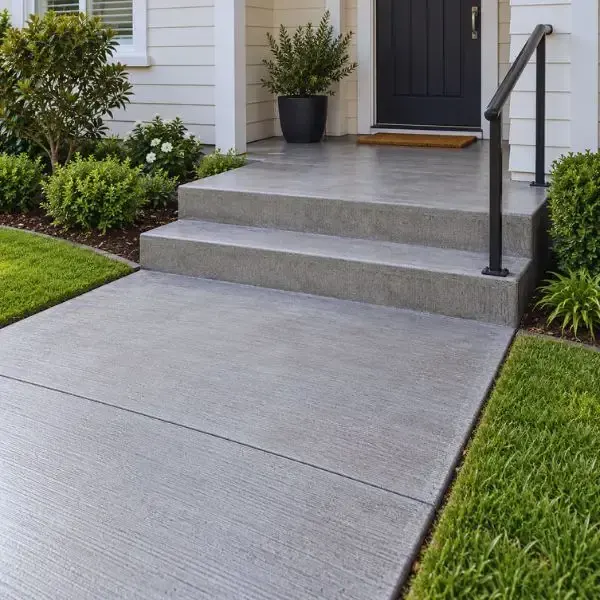
Sealed concrete entrance path and steps with a textured finish and handrail leading to a residential front door.
  • Building Code clause D1.3.3(d) requires access routes to provide adequate slip resistance under normal use.


  • Relevant routes can include approaches to a building’s main entrance. The requirements should be assessed for the particular route rather than applied identically to every outdoor surface.


  • Consider the completed sealing system, including the underlying texture and proposed treatment. The appearance of unsealed concrete does not establish how it will perform after sealing.


  • Where an access route gets wet during normal use, assess its suitability for those conditions rather than relying only on dry-surface performance.


  • Steps and sloping approaches need particular attention. Ask whether the proposed system has suitable supporting information for the intended use.


  • Keep drainage and ongoing cleaning in the maintenance plan so standing water, dirt, or organic growth do not undermine safe footing.


For guidance on concrete finishes, sealing options, and which treatment suits each situation, explore What Concrete Surfaces Should Be Sealed?

Surface Preparation, Runoff And Noise

Cleaning before sealing can create contaminated runoff and equipment noise. Planning the work helps protect drains and waterways while reducing disruption to neighbours.
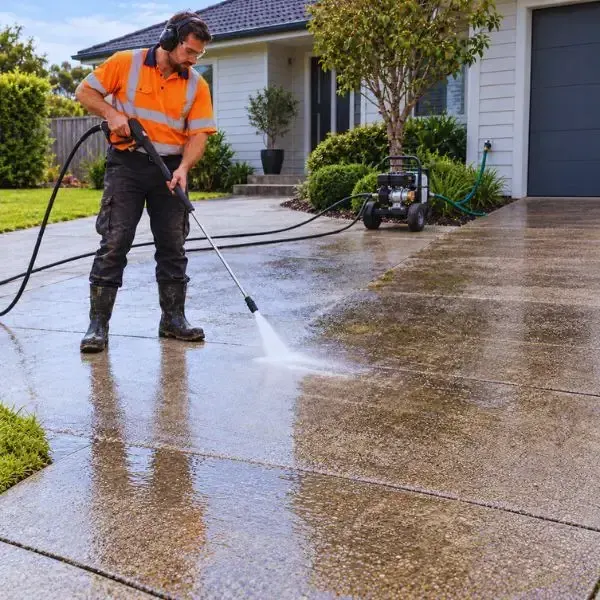
Contractor water blasting a residential concrete driveway to clean the surface before sealing.
  • Identify nearby stormwater drains and where cleaning water will flow before water blasting begins. Arrange suitable collection and containment for contaminated runoff.


  • Upper Hutt City Council advises collecting driveway and path sweepings rather than hosing them into the street or drains. Oil and coating residues also need controlled handling.


  • Keep sealer, solvents, and contaminated wash water out of stormwater drains. Agree on an appropriate disposal method with the contractor rather than assuming a sink or garden is suitable.


  • Use the product’s safety information to guide handling and waste disposal. These practical controls are separate from whether building consent is needed.


  • Where preparation involves noisy construction activity, Hutt City Council publishes working hours of 7.30 a.m. to 6.00 p.m., Monday to Saturday.


  • Upper Hutt City Council publishes working hours of 7.00 a.m. to 7.00 p.m., Monday to Saturday. Both councils state that noisy construction is not permitted on Sundays or public holidays.


  • These noise considerations mainly relate to water blasting or other powered preparation. Quiet roller application is different, and working within the listed hours does not remove the responsibility to manage unreasonable noise.


Cleaning, runoff containment, and waste handling may affect the preparation allowance. Learn how these items relate to your budget in Concrete Sealing Cost & Prices.

Council Checks Before Concrete Sealing

A clear description of the surface and proposed work makes it easier to resolve questions before preparation begins. Keep any council advice alongside the agreed project scope.

A homeowner and a contractor are reviewing concrete sealing project details on a clipboard beside a residential driveway.
  • Record the property address, surface location, existing treatment, and whether the work involves maintenance sealing or a different finish.


  • List any associated alterations separately so the council can assess more than the surface treatment.


  • If approval requirements are uncertain, agree on who will seek advice and provide the relevant photos, product information, or plans.


  • Confirm responsibility for preparation, runoff collection, waste disposal, and keeping people off the treated surface until it is ready for use.


  • For projects outside Lower Hutt and Upper Hutt, check with the council responsible for the property.


Official Council And Building Resources:


Note: Council rules and Building Code guidance can change. This article provides general information; confirm the requirements for your property and proposed work before starting.

Next Steps For Council-Compliant Concrete Sealing

Planning to seal a driveway, path, patio, porch, steps, or shed or garage floor? Gather your surface details, photos, and any related project changes so our specialist contractor can assess the work and identify any questions that need further advice.


Explore Concrete Sealing for service information, surface considerations, and guidance on arranging a specialist site assessment and receiving your project quote.


To take the next step, call 04 242 0311 or fill out our CONTACT FORM for your FREE QUOTE!

Business Hours & Contact

Mon - Fri

7:00 am - 5:30 pm

Saturday

7:00 am - 3:00 pm

Sunday

Closed

Social Media Accounts

Lower & Upper Hutt Concrete Services Logo - Footer Section.

CLM Connect Limited Owned

Lower & Upper Hutt Concrete Services is a local service marketing and coordination channel managed by CLM Connect Limited.


Physical concrete work is completed by independent concrete contractors or service providers.

© 2026 Lower & Upper Hutt Concrete Services | All Rights Reserved