L/C Concrete Services In Lower Hutt, Wellington.

How Is Exposed Aggregate Concrete Finished In Lower Hutt & Upper Hutt?

Quick answer: Exposed aggregate concrete is placed and finished, then a surface retarder delays the top cement paste. Once ready, the surface is washed and brushed to reveal the decorative stone, then cured and sealed where suitable.

Understanding The Exposed Aggregate Finishing Process In The Hutt Valley

Lower & Upper Hutt Concrete Services explains the exposed aggregate finishing process across Lower Hutt, Upper Hutt, and Wellington. The final result depends on the concrete mix, surface retarder, exposure timing, washing, weather, curing, and consistency.

Lower & Upper Hutt Concrete Services Logo - How Is Exposed Aggregate Concrete Finished Properly Article.

Quick Exposed Aggregate Concrete Finishing Overview

Exposed aggregate is created by placing decorative concrete, delaying the surface paste, then washing it away to reveal the stone before curing.
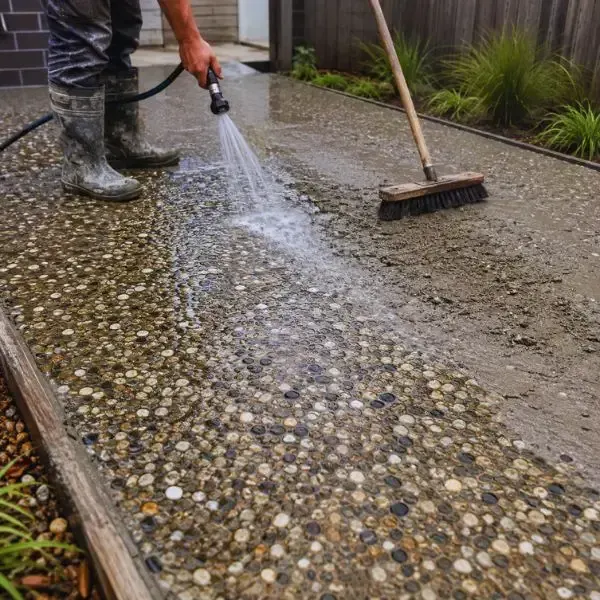
Exposed aggregate concrete is being washed and brushed to reveal the decorative stone during the finishing process.
  • The aggregate mix, stone size, and oxide option are selected before the concrete is placed.


  • The fresh concrete is placed, levelled, and initially finished to the required shape, levels, and falls.


  • For the common horizontal surface-retarder method, the retarder is applied at the appropriate stage before the surface sets.


  • The retarder delays hardening of the upper layer of the cement paste, while the concrete beneath continues to set.


  • The softened surface paste is later washed and brushed away to reveal the decorative aggregate.


  • The exposed surface is cleaned, and the concrete continues through its normal curing process.


  • Sealing may follow later where it forms part of the selected finish and the surface is suitably prepared.

Aggregate Mix, Placement And Initial Finishing

The final appearance starts with the concrete mix. Aggregate type, stone size, oxide, placement, and initial finishing shape the exposed surface.
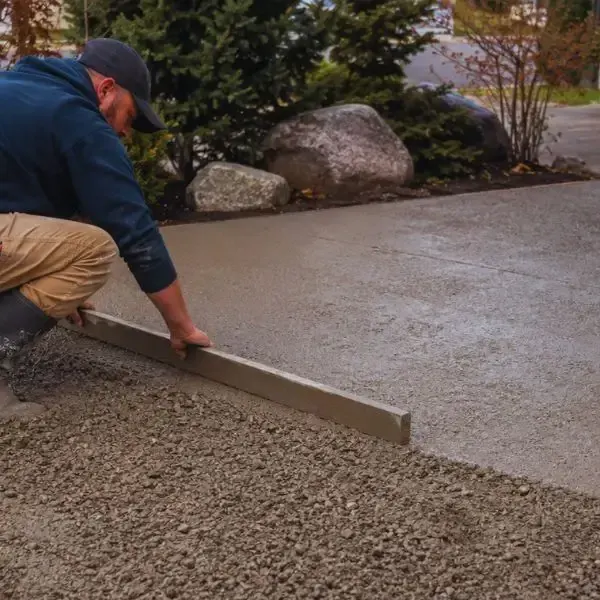
Fresh concrete is being placed and levelled during the initial exposed aggregate finishing process.
  • Smaller aggregate generally creates a finer-looking exposed texture, while larger stone creates a bolder appearance.


  • Oxide can be included where selected to change the colour of the cement matrix surrounding the exposed stone.


  • Natural aggregate can vary in colour, shape, and distribution.


  • Separate concrete batches and pours may not look perfectly identical once exposed.


  • The concrete is placed throughout the prepared driveway, path, patio, or porch area.


  • Levels and drainage falls are established during the initial concrete work.


  • Edges, curves, corners, thresholds, and transitions are formed before the later exposure stage.


  • Consistent placement and initial finishing help support a balanced exposed appearance across the completed area.


The selected aggregate, stone size, oxide, project type, and other finish choices can also influence the project budget. For detailed pricing guidance, see Exposed Aggregate Concrete Cost & Prices.

Applying Surface Retarder To Fresh Concrete

After initial finishing, a surface retarder delays the upper cement paste, allowing the decorative aggregate to be cleanly revealed during the controlled wash-off stage.
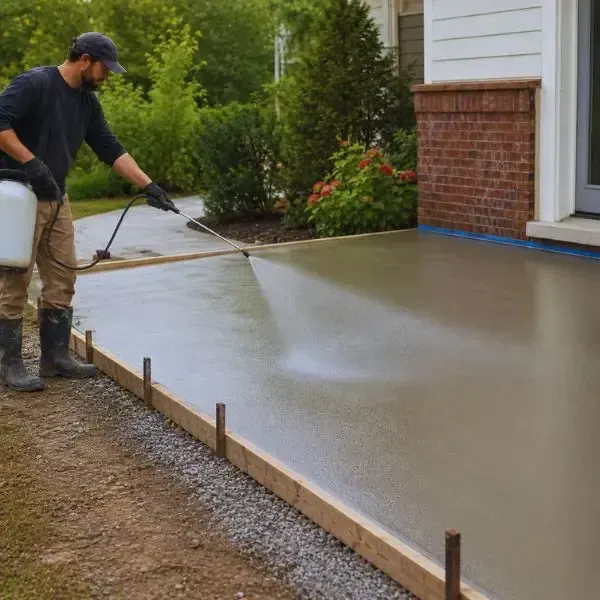
Surface retarder is being spray-applied to freshly finished concrete before the exposed aggregate wash-off stage.
  • The retarder works at the concrete surface rather than stopping the whole slab from hardening.


  • For common horizontal retarder systems, application occurs after the initial bleed water has dissipated and before surface setting has commenced.


  • Even application helps support a consistent depth of exposure across the area.


  • The retarder product and application need to suit the concrete and finishing system being used.


  • Temperature, concrete characteristics, product application, and timing can affect how long the upper layer remains removable.


  • The concrete placer monitors the actual surface rather than relying only on a fixed number of hours.


  • Contractors may use different suitable products or systems, so the exact method can vary from project to project.

Washing The Surface And Revealing The Aggregate

Once the concrete underneath has set enough, the softened surface paste is washed and brushed away to reveal the decorative aggregate, creating its distinctive textured finish.
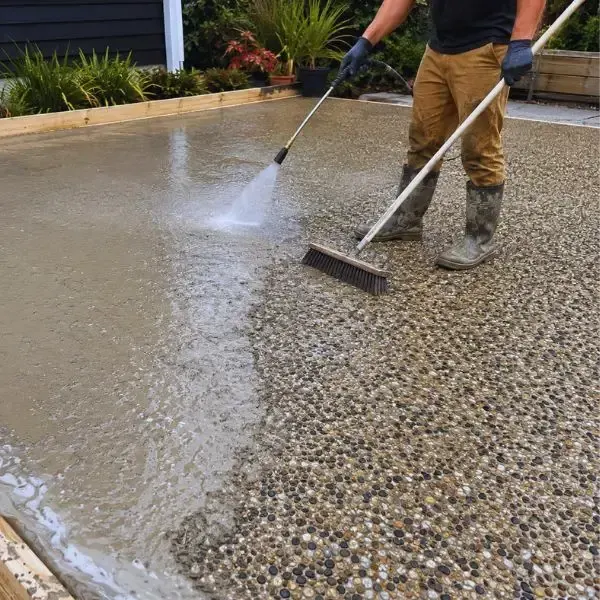
Exposed aggregate concrete is being washed and brushed as the softened surface paste is removed, revealing the stone.
  • The concrete placer monitors the surface to determine when the wash-off stage should begin.


  • Water, brushing, or another suitable low-pressure method can be used depending on the retarder system.


  • The softened upper cement paste is removed until the intended amount of decorative aggregate is visible.


  • Washing too early can disturb concrete that has not developed enough set.


  • Leaving a retarded surface beyond its suitable removal window can make the softened layer more difficult to remove.


  • Larger areas may need to be washed progressively as different parts of the pour reach the appropriate stage.


  • Edges, corners, curves, borders, and transitions can require additional care during exposure.


  • The aim is a clean and reasonably consistent level of aggregate exposure across the completed project.

Weather, Timing And Site Conditions

Weather, pour size, access, and site conditions can affect how quickly the concrete develops, when exposure and washing should begin, and finishing consistency.
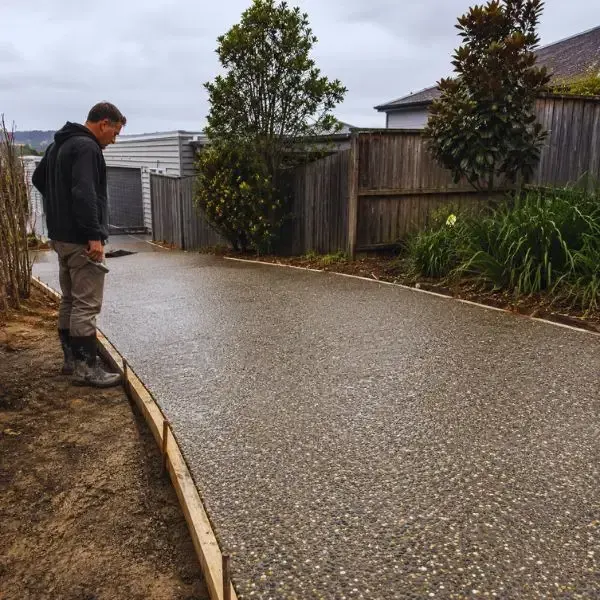
Contractor inspecting exposed aggregate concrete in overcast conditions that can affect finishing.
  • Warmer conditions can shorten the available retardation and finishing period.


  • Cooler conditions can extend the period before the softened surface is ready for removal.


  • Rain can interfere with fresh surface work and influence when concrete work can proceed.


  • Large areas may require carefully managed placement and washing sequences.


  • Restricted access can slow placement before the decorative finishing stages begin.


  • Sloping, curved, narrow, or detailed areas can require additional attention during finishing.


  • Different sections of a large project can develop at different rates depending on the conditions they experience.


  • There is no single universal wash-off time that suits every exposed aggregate pour.


Local rainfall, access, terrain, slopes, ground conditions, and other practical factors affecting concrete projects across the region are covered in greater detail through Concrete Work In The Hutt Valley.

Curing, Final Cleaning, Sealing And Natural Variation

After washing, the concrete continues curing. Final cleaning, surface preparation, and sealing depend on the selected finish and product system, with long-term surface performance considered.
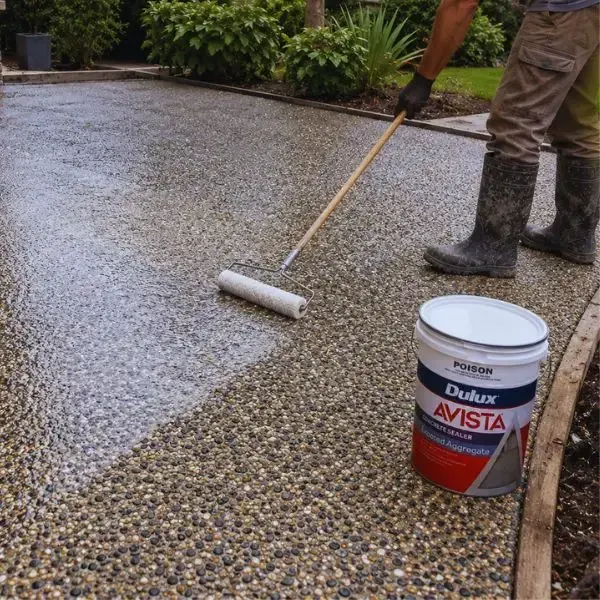
Roller and exposed aggregate sealer are applied to the finished surface during the final sealing stage.
  • Exposing the stone does not mean the concrete has finished curing.


  • Foot traffic, vehicles, and heavier loads should wait until a suitable curing time has passed.


  • The exposed surface may require further cleaning or preparation before a particular sealer is applied.


  • Sealing does not necessarily happen immediately after the wash-off stage.


  • Sealer preparation and application requirements depend on the product or system being used.


  • When selected, a sealer can affect the depth of colour and the overall appearance of the stone and the surrounding cement surface.


  • Aggregate colour, stone distribution, oxide tone, exposure depth, curing, weather, and separate pours can contribute to variation in natural appearance.


  • New extensions or replacement sections can therefore be difficult to match perfectly with older exposed aggregate.


For practical guidance on when new concrete can be walked on, driven on, or prepared for later treatments, review Concrete Curing & Drying Times.


For longer-term cleaning, protection, maintenance, and resealing guidance, continue to Exposed Aggregate Concrete Maintenance And Sealing Information.

Next Steps For Exposed Aggregate Concrete

Ready to plan your exposed aggregate driveway, path, patio, or porch? A good exposed aggregate finish comes from the complete process working together, including mix selection, placement, surface retardation, wash-off timing, weather, curing, and final treatment.


Explore our Exposed Aggregate Concrete page to compare aggregate options, project types, pricing information, and the quote process.


To take the next step, call 04 242 0311 or fill out our CONTACT FORM for your FREE QUOTES!

Business Hours & Contact

Mon - Fri

7:00 am - 5:30 pm

Saturday

7:00 am - 3:00 pm

Sunday

Closed

Social Media Accounts

Lower & Upper Hutt Concrete Services Logo - Footer Section.

CLM Connect Limited Owned

Lower & Upper Hutt Concrete Services is a local service marketing and coordination channel managed by CLM Connect Limited.


Physical concrete work is completed by independent concrete contractors or service providers.

© 2026 Lower & Upper Hutt Concrete Services | All Rights Reserved